


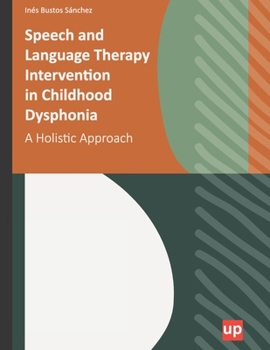
Speech and Language Therapy Intervention in Childhood Dysphonia

Contextualization of childhood dysphonia based on the influence of individual and environmental factors, and the need to avoid applying uniform, one-size-fits-all protocols.
A methodology that facilitates the integration and generalization of new vocal behaviors in the child.Practical activities of a holistic and integrative nature that optimize learning and its transfer to everyday situations.Practical areas of work that consider the body as a whole, integrating new sensations, postural changes, and variations in muscle tone, which can be transferred to the way the child produces their voice.Adaptable and flexible activities that allow professionals to recreate-based on the initial proposals-their own working style and approach.Although therapeutic goals may be the same as those in adult voice rehabilitation, the methodology differs substantially when working with children with voice disorders. In this regard, the intervention must align with how children learn. Neuroeducation explains that children learn:
Through play, which is their primary learning tool.By exploring and experimenting through their senses.By imitating adults and other children; hence the importance of providing good verbal models as adults.By interacting with other people, since learning is social.They learn when they feel emotionally safe, valued, and motivated, and they learn progressively, adapting the learning process to each child's individual pace.
All of these aspects shape the methodology proposed in the practical section, through multiple activities grouped into the following areas:
Body and vocal warm-up.Postural balance and optimal muscle tone.Control and regulation of breathing.Phono-respiratory coordination.Resonance and oral articulation.Each activity clearly states the objective to be achieved, facilitating the professional's selection and/or adaptation of activities to the proposed goals.
Customer Reviews
ThriftBooks ® and the ThriftBooks ® logo are registered trademarks of Thrift Books Global, LLC
