


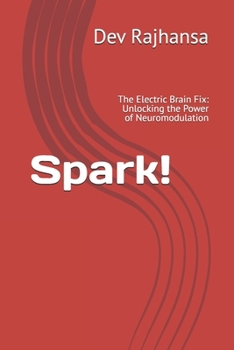
Spark!: The Electric Brain Fix: Unlocking the Power of Neuromodulation

"The Electric Brain Fix" portrays the brain as a complex electrical system where neurons communicate through electrical pulses and synchronized brainwaves. This electrical nature allows for therapeutic intervention using non-invasive brain stimulation (NIBS) to influence brain circuits.1 The book primarily contrasts two key technologies: transcranial direct current stimulation (tDCS) and transcranial alternating current stimulation (tACS).
tDCS delivers a constant, steady current, acting like a "volume knob" to increase or decrease the overall excitability of a specific brain region.2 It is a well-supported treatment for major depression, where it helps rebalance activity in the prefrontal cortex, and is also used to aid motor recovery after a stroke.
Conversely, tACS uses a rhythmic, oscillating current, functioning like a "radio tuner" to sync with and amplify the brain's natural rhythms.3 Evidence suggests tACS is superior for enhancing cognitive processes, such as memory, that depend on specific brainwave frequencies.4
The book emphasizes that while these techniques are very safe, their effects are often modest and vary significantly between individuals. It concludes that the future of neuromodulation lies in personalization, moving beyond a one-size-fits-all model.5 The goal is to develop adaptive "closed-loop" systems that use brain imaging and real-time monitoring to tailor stimulation to a person's unique neurobiology.
Customer Reviews
ThriftBooks ® and the ThriftBooks ® logo are registered trademarks of Thrift Books Global, LLC
