


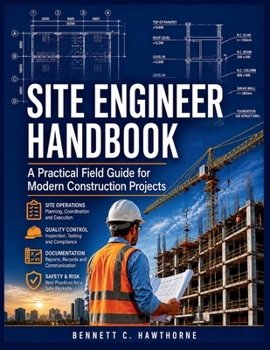
Site Engineer Handbook: A Practical Field Guide for Modern Construction Projects

A newly qualified engineer can calculate a beam's capacity in a lecture theatre and still not know, on the first morning of an actual construction project, which drawing revision on the site table is the one to trust.
Most engineering education prepares a graduate to analyse and design. Very few courses prepare that same graduate for the moment they step onto an active construction site and are expected to already know how to read the drawings in front of them, recognise sound reinforcement work from unsound work, or write a site report a project manager can actually use. That gap between classroom theory and site reality is where early mistakes happen, where confidence is lost fastest, and where a costly design error caught on paper becomes an expensive error caught in concrete and steel.
This field guide exists to close that gap. It was written for the reader who is about to start, or has recently started, work on a construction site, whether as a student on an industrial placement, a graduate trainee, a junior site engineer, a site supervisor, or a technician, and who needs practical, field-ready knowledge rather than another derivation-heavy textbook.
Inside, you will find help to:
Read structural and architectural drawing sets with confidence, including grid references, schedules, and revision control, so a superseded drawing never becomes an expensive mistake.Set out and check work on site using core surveying and levelling methods, with worked arithmetic and common error sources explained.Identify, check, and query materials deliveries against specification, from reinforcement and aggregates to masonry units and admixtures.Supervise formwork, reinforcement, and concrete work through inspection, casting, and curing, using clear step-by-step field procedures.Apply consistent quality control and site documentation habits that hold up under later scrutiny.Recognise and manage common site safety and risk situations, and communicate clearly with contractors and consultants.Track programme, progress, and productivity in a way that supports, rather than fights, the rest of the site team.Every chapter follows the same practical rhythm: what the reader needs to know, why it matters on site, how to actually do it step by step, a worked field example, the mistakes people commonly make, tips drawn from experienced practice, a photocopiable site checklist, and self-test questions to confirm understanding. Because construction codes and standards differ from country to country, the guide deliberately avoids tying itself to a single national code; instead it explains what to check and where that kind of requirement typically lives, so the underlying skill transfers to whichever standard the reader works under.
This book is written for engineering students, graduate trainees, junior site engineers, site supervisors, and technicians who are moving, or have recently moved, from classroom instruction into hands-on responsibility on an active construction site, and who want a single reference that stays open on the desk or in the site bag rather than on a shelf.
Begin building a clearer understanding of site practice with a field guide designed around the exact challenges a new site engineer faces first, and start turning classroom knowledge into confident, checked, on-site decisions.
Customer Reviews
ThriftBooks ® and the ThriftBooks ® logo are registered trademarks of Thrift Books Global, LLC
