


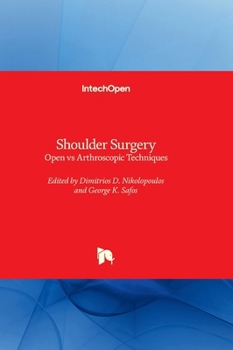
Shoulder Surgery - Open vs Arthroscopic Techniques
No Customer Reviews

Orthopedic practice involves treating a great number of shoulder pathologies, including trauma and sports-related injuries in young adults or arthritis and rotator cuff arthropathies in elderly people. The range of movement (ROM) of the shoulder is 340 degrees, which is the reason for many problems like impingement syndrome, rotator cuff rupture, SLAP (long head of biceps pathology), shoulder fractures, rotator cuff arthropathies, shoulder tumors, and trapezium pathology, all of which are painful conditions of the upper extremity that result in serious discomfort. Shoulder pathology is primarily diagnosed by history and physical examination, but MRIs and CT scans are also very helpful for diagnosis. The mainstay of treatment involves early identification before the onset of degenerative changes, physical therapy exercises to strengthen the shoulder girdle, and pharmacological interventions to decrease inflammation. Open and arthroscopic techniques have advanced in the last decade, minimizing the possibility of rotator cuff arthropathy and arthritis. This book provides a comprehensive overview of shoulder pathologies, including shoulder instability, glenoid bone defect, greater tuberosity fractures, lesions of the proximal long head of the biceps tendon, and trapezius myalgia, as well as their different treatments, including open and arthroscopic techniques.
Format:Hardcover
Language:English
ISBN:183769673X
ISBN13:9781837696734
Release Date:November 2023
Publisher:Intechopen
Length:102 Pages
Weight:1.02 lbs.
Dimensions:0.4" x 7.0" x 10.0"
Customer Reviews
0 rating
Copyright © 2026 Thriftbooks.com
Terms of Use | Privacy Policy | Do Not Sell/Share My Personal Information | Cookie Notice | Cookie Preferences | Accessibility Statement
ThriftBooks ® and the ThriftBooks ® logo are registered trademarks of Thrift Books Global, LLC
ThriftBooks ® and the ThriftBooks ® logo are registered trademarks of Thrift Books Global, LLC
