ISBN: 0771066708
ISBN13: 9780771066702
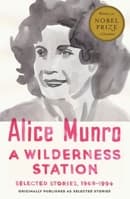
Selected Stories
$5.79List Price: $0.00
ISBN: 0771066708
ISBN13: 9780771066702
Formats
Conditions
A read copy that remains in clean condition.
Formats
Conditions
A read copy that remains in clean condition.
Alice Munro grew up in Wingham, Ontario, and attended the University of Western Ontario. She has published thirteen collections of stories as well as a novel, Lives of Girls and Women, and two volumes of Selected Stories. During her distinguished career she has been the recipient of many awards and prizes, including three of Canada's Governor General's Literary Awards and two of its Giller Prizes, the Rea Award for the Short Story, the Lannan Literary Award, England's W. H. Smith Book Award, the National Book Critics Circle Award, and the Man Booker International Prize. In 2013 she was awarded the Nobel Prize for Literature. Her stories have appeared in The New Yorker, The Atlantic Monthly, The Paris Review, Granta, and other publications, and her collections have been translated into thirteen languages.
Alice Munro gives us a quick and sometimes fleeting glimpse into the inner workings of the stories' characters and lives. This is one of the most literary short-story collections I've ever read. All of the stories in this collection are powerful and intense. Munro has the ability to add tremendous depth in a short story. It isn't easy to have precise characterization and story development in short stories, but Munro does a brilliant work in creating memorable characters and compelling tale in just a few pages. I can't recommend this wonderful collection enough.
Alice Munro is rightfully considered to be one of the greatest short-story writers in the English-speaking world. Certainly a story like "The Progress of Love," in this volume--a rich, poignantly ironic delineation of the selectivity of memory--is proof enough that Munro is as great as her reputation would have it, and that she is one of the few living writers who deserves to be mentioned in the same sentence as Chekhov. Nevertheless, plowing through her Selected Stories is like gorging on a box of chocolates; you'd be a lot better off savoring just one or two at a time. The maiin problem is that Munro's subject range is narrow. How many stories can you read in one sitting about women from impoverished small-town Ontario, who are misunderstood and often brutalized by their families, boyfriends and husbands? (The reviewers who called Munro's women weak are misreading the stories severely; these women could have hauled the wounded Titanic to port, 2,000 passengers and all, single-handedly. They have the clemency of the very strong, which unfortunately means that weaker, more spiteful souls can walk all over them.) Yet within each story, Munro's elegant, lucid prose style and encyclopedic knowledge of the human mind and heart make themselves felt. I will reread stories such as "Material," "Chaddeleys and Flemings," "Dulse," "The Turkey Season" and "The Beggar Maid" with joy and admiration for their perfect artistry. But I'll have to wait to reread stories such as "Labor Day Dinner," which after an unrelieved diet of Munro stories can almost seem like a parody of the author. Do yourself a favor; buy this wonderful book, but savor its delights sparingly, as you would a box of Godivas.
Alice Munro's collection of short stories embodies over 25 of her finest works. Within the text, she deals with issues of family, friends, betrayal, and the creation of art--sometimes all at once. Her writing is powerful, and she controls it with unimaginable skill. A must-read for anyone truly interested in the art of fiction.
I was thoroughly entranced and mesmerized by these stories. Ms. Munro accomplishes what has to be the most beautiful and difficult task in fiction--illuminating the darkest corners of human nature. I don't mean dark as necessarily evil, but dark as in the sides of oneself no one talks about, or even knows is there. "Fits" is a perfect example of this. I read the stories out of order, which produced an interesting effect. They do have a chronology. The opening pieces are very different from the ones at the end.