


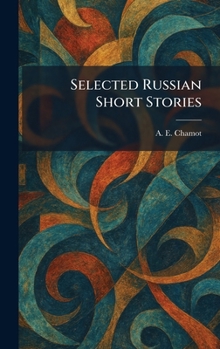
Selected Russian Short Stories

Select Format
Select Condition 
Book Overview
"Selected Russian Short Stories" is a comprehensive anthology that serves as an essential introduction to the vast and influential world of Russian prose. Curated and translated by A.E. Chamot, this collection brings together a diverse range of narratives from the 19th and early 20th centuries, showcasing the evolution of the short story form in one of the world's most celebrated literary traditions.
The volume features works that capture the essence of the Russian experience, exploring profound themes of morality, social hierarchy, psychological depth, and the resilience of the human spirit. From satirical observations of bureaucratic life to poignant reflections on rural existence and the existential struggles of the urban elite, these stories highlight the unique stylistic range and philosophical weight characteristic of the era's masters. By presenting these classic tales in a single volume, Chamot provides readers with a panoramic view of the cultural and artistic shifts that defined Russian literature during its Golden Age and beyond. This collection remains a valuable resource for students, scholars, and general readers interested in the foundational works that have shaped modern storytelling.
This work has been selected by scholars as being culturally important, and is part of the knowledge base of civilization as we know it. This work was reproduced from the original artifact, and remains as true to the original work as possible. Therefore, you may see the original copyright references, library stamps (as most of these works have been housed in our most important libraries around the world), and other notations in the work.
This work is in the public domain in the United States of America, and possibly other nations. Within the United States, you may freely copy and distribute this work, as no entity (individual or corporate) has a copyright on the body of the work.
As a reproduction of a historical artifact, this work may contain missing or blurred pages, poor pictures, errant marks, etc. Scholars believe, and we concur, that this work is important enough to be preserved, reproduced, and made generally available to the public. We appreciate your support of the preservation process, and thank you for being an important part of keeping this knowledge alive and relevant.
Customer Reviews
ThriftBooks ® and the ThriftBooks ® logo are registered trademarks of Thrift Books Global, LLC
