


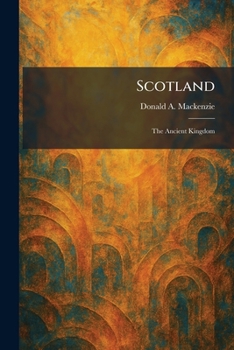
Scotland: The Ancient Kingdom

"Scotland: The Ancient Kingdom" offers a comprehensive exploration of the early history and origins of Scotland. Written by the esteemed folklorist and historian Donald A. Mackenzie, this work delves into the prehistoric and proto-historic eras of the northern British Isles. The narrative traces the development of the region from its earliest inhabitants through the Roman occupations, the emergence of the Picts and the Scots, and the eventual unification of the kingdom.
Mackenzie masterfully weaves together archaeological evidence, classical accounts, and traditional lore to reconstruct the cultural and political landscape of ancient Caledonia. Readers will find detailed accounts of tribal struggles, the influence of Norse and Celtic migrations, and the foundational events that shaped the Scottish identity. This scholarly yet accessible study provides invaluable insights into the social structures, religious beliefs, and military conflicts of a land on the edge of the known world. "Scotland: The Ancient Kingdom" remains a significant contribution to the study of British antiquity, appealing to history enthusiasts and students of Celtic studies alike.
This work has been selected by scholars as being culturally important, and is part of the knowledge base of civilization as we know it. This work was reproduced from the original artifact, and remains as true to the original work as possible. Therefore, you may see the original copyright references, library stamps (as most of these works have been housed in our most important libraries around the world), and other notations in the work.
This work is in the public domain in the United States of America, and possibly other nations. Within the United States, you may freely copy and distribute this work, as no entity (individual or corporate) has a copyright on the body of the work.
As a reproduction of a historical artifact, this work may contain missing or blurred pages, poor pictures, errant marks, etc. Scholars believe, and we concur, that this work is important enough to be preserved, reproduced, and made generally available to the public. We appreciate your support of the preservation process, and thank you for being an important part of keeping this knowledge alive and relevant.
Related Subjects
HistoryCustomer Reviews
ThriftBooks ® and the ThriftBooks ® logo are registered trademarks of Thrift Books Global, LLC
