


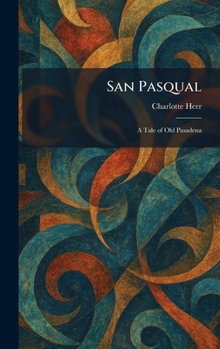
San Pasqual: A Tale of Old Pasadena

"San Pasqual a Tale of Old Pasadena" is an evocative work of historical fiction that transports readers back to the formative years of Southern California. Set against the sun-drenched landscape of the San Gabriel Valley, the narrative explores the transition of the region from a pastoral Mexican land grant-the Rancho San Pasqual-into the burgeoning settlement that would become the city of Pasadena. Author Charlotte Herr weaves a story steeped in local color, capturing the romanticized atmosphere of early California life, characterized by its sprawling ranchos, majestic mountains, and the shifting social dynamics of the 19th century.
The work provides a window into the cultural heritage of the West, blending elements of romance and historical drama. Through its depiction of the land and its people, the book highlights the enduring charm and natural beauty that drew early settlers to the area. For readers interested in California history or regional American literature, "San Pasqual a Tale of Old Pasadena" offers a nostalgic and detailed look at a vanished era, preserving the legends and spirit of a community in its infancy. This tale serves as both a literary tribute to the heritage of Pasadena and a classic example of early 20th-century regional storytelling.
This work has been selected by scholars as being culturally important, and is part of the knowledge base of civilization as we know it. This work was reproduced from the original artifact, and remains as true to the original work as possible. Therefore, you may see the original copyright references, library stamps (as most of these works have been housed in our most important libraries around the world), and other notations in the work.
This work is in the public domain in the United States of America, and possibly other nations. Within the United States, you may freely copy and distribute this work, as no entity (individual or corporate) has a copyright on the body of the work.
As a reproduction of a historical artifact, this work may contain missing or blurred pages, poor pictures, errant marks, etc. Scholars believe, and we concur, that this work is important enough to be preserved, reproduced, and made generally available to the public. We appreciate your support of the preservation process, and thank you for being an important part of keeping this knowledge alive and relevant.
Customer Reviews
ThriftBooks ® and the ThriftBooks ® logo are registered trademarks of Thrift Books Global, LLC
