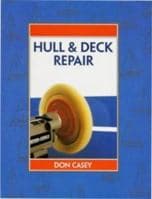
A fiberglass hull's seamless nature leads many boatowners to conclude that repair must be difficult. Wrong. Here, clearly and abundantly illustrated, is all you need to know to seal joints, bed hardware, replace portlights, locate leaks, fix cracks and even holes, restore your hull's gloss, renew nonskid decks, and much more. You'll wonder what you were worried about.
This book covers the basic as well as some advanced topics about repairing all types of fiberglass hulls, decks, through hull fittings, teak wood, and other related topics. I recommend the book for the beginner who needs basic information about fiberglass repair.
0
★★★★★
2nd best book on Fiberglass repairs, and not just for sailboats
By Thriftbooks.com User, March 8, 2006
While I actually like "Fiberglass Repair: Polyester or Epoxy" by David and Zora Aiken a touch better than this book, they are both strong. They both have lots of clear ILLUSTRATIONS, which to my mind are preferable to photos at depicting this sort of information. Blister repair (not addressed at all in older books on fiberglass repeair), wet deck cores, gelcoat cosmetics are all covered, as well as a good discussion of when to use Epoxy resins versus the cheaper Polyesters. I recommend this book for owners of ALL fiberglass boats, as the construction and repairs are quite universal. The relatively large format of this book helps the clarity of the drawings, and makes it possible to imagine using it like a cookbook, propped open on the workbench as you step through the steps.
0
★★★★★
Excellent coverage of fiberglass repairs
By Thriftbooks.com User, October 4, 2001
Covers all the areas I needed. Soft & rotten cores, broken fiberglass, chipping, etc. I liked it so much I just ordered his book on refinishing.
0
★★★★★
Lots of details in a small package
By Thriftbooks.com User, August 22, 2000
This is an excellent book for someone who knows nothing about fiberglass boat repair. It starts off with a brief discussion of the three major sealant types (polysulfide, polyurethane and silicone) and when to use each. Other sections cover the different types of resin, epoxy choices, etc. etc. Excellent information when trying to decide which of the gazillion products to purchase in the boating catalogs. Major sections include Leaks (finding and fixing, installing deck hardware), Restoring the Gloss (polishing and scratch repair), Deck Repairs (stress cracks, voids, nonskid surfaces, and teak decks), Laminate Repair (fiberglass layup, types of resins, epoxy), Core Problems (wet core, stiffening), Hull Repairs (gouges, blisters, impact damage), Keel and Rudder Damage (centerboard pivots, weeping keels, etc.) This little book is not afraid to tackle big projects--the Core Problems section for example shows the repair of a huge 2-foot diameter section of rotted core. The book makes it sound easy, but I'd rather not think about that much work. The section on gelcoat--what it is, how it is manufactured, and how to keep it looking good as long as possible--is by itself worth the price of the book.
0
★★★★★
what a relief
By Thriftbooks.com User, June 10, 1998
With surprising (for a how-to book) and welcomed literateness, Don Casey instructs the cowering novice (me) in the black arts of fiberglass repair. Though I haven't yet proved his lessons in practice, I already feel more confident and competent. And isn't that what how-to books are all about?