


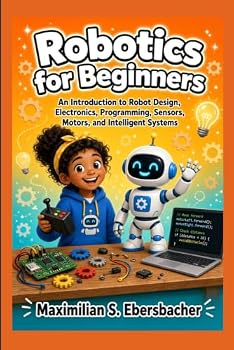
Robotics for Beginners: An Introduction to Robot Design, Electronics, Programming, Sensors, Motors, and Intelligent Systems

An Introduction to Robot Design, Electronics, Programming, Sensors, Motors, and Intelligent Systems
How does a robot sense its surroundings? How does it decide what to do, control its motors, and respond to information from the environment?
Robotics for Beginners provides an accessible introduction to the fundamental concepts behind modern robotic systems. It brings together mechanical design, electronics, programming, sensing, motor control, and intelligent systems to help readers understand how the major components of a robot work together.
The book begins with foundational robotics concepts and gradually introduces the technologies used to design and operate robotic machines. Readers can explore both the physical and computational sides of robotics while developing an understanding of how engineers approach robotic system design.
Inside the book, readers explore:
Fundamental concepts of robotics and robot system architecture
Basic principles of robot design and mechanical structures
Electronic components commonly used in robotic systems
Sensors and how robots collect information from their surroundings
Motors, actuators, and mechanisms for producing movement
Programming concepts used to control robotic systems
Embedded controllers and their role in robotics
Feedback and basic robot control concepts
Robot motion and movement coordination
Intelligent systems and autonomous robotic behavior
Communication between robotic hardware and software
Practical considerations when developing robotic systems
One of the central ideas in robotics is integration. A robot is more than a collection of motors, sensors, electronic components, and software. These elements must communicate and operate together as a coordinated system. Understanding this relationship provides a foundation for studying more advanced robotics topics.
The book also introduces the engineering thinking behind robotics. Readers can learn how complex robotic problems can be divided into smaller components, how different technologies contribute to a system, and how sensing, computation, control, and mechanical movement interact.
Whether you are beginning your study of robotics, developing an engineering foundation, or simply interested in understanding how robots work, Robotics for Beginners offers a structured starting point for exploring the field.
From robot design and electronics to programming, sensors, motors, and intelligent systems, this book connects the essential building blocks of robotics into one accessible introduction.
Explore the components. Understand the systems. Build your foundation in robotics.
Customer Reviews
ThriftBooks ® and the ThriftBooks ® logo are registered trademarks of Thrift Books Global, LLC
