


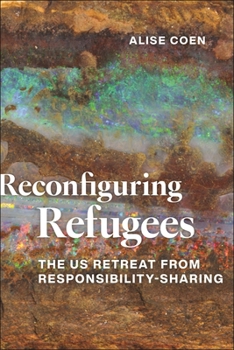
Reconfiguring Refugees: The Us Retreat from Responsibility-Sharing
No Customer Reviews

Shows how domestic identity narratives and political polarization shape the sociopolitical response to refugees
The United States once played a major role in global refugee resettlement, accounting for nearly two-thirds of all refugees resettled worldwide. However, in recent years, it has dramatically cut refugee admissions and implemented discriminatory policies on refugee protection. These policies have been justified amid intensifying xenophobic rhetoric against specific groups. In this book, Alise Coen explains why the monumental shift around refugee resettlement occurred, particularly in response to the high-profile conflict in Syria. She shows how refugees--and broader global migration debates--became contentious political issues in the US, revealing the many ways in which refugees have been increasingly weaponized as partisan symbols by Democrats and Republicans. The book calls attention to the power of rhetoric and identity narratives, and shows how the language used to talk about refugees fuels divisivepolicies. From the years leading up to the Trump administration's policies targeting Muslim refugees to debates during the Biden administration around who deserves access to asylum, Coen examines how ideas about race, gender, and nativism shape US approaches toward migration. As arguments for "closing the border" continue to gain traction and politicians continue to use global displacement issues to further their agendas, Reconfiguring Refugees explores the ideas, meanings, and policies that undermine and influence US responsibility-sharing.
Format:Paperback
Language:English
ISBN:1479827975
ISBN13:9781479827978
Release Date:August 2024
Publisher:New York University Press
Length:256 Pages
Weight:0.85 lbs.
Dimensions:0.9" x 5.8" x 8.9"
Customer Reviews
0 rating
Copyright © 2026 Thriftbooks.com
Terms of Use | Privacy Policy | Do Not Sell/Share My Personal Information | Cookie Policy | Cookie Preferences | Accessibility Statement
ThriftBooks ® and the ThriftBooks ® logo are registered trademarks of Thrift Books Global, LLC
ThriftBooks ® and the ThriftBooks ® logo are registered trademarks of Thrift Books Global, LLC
