


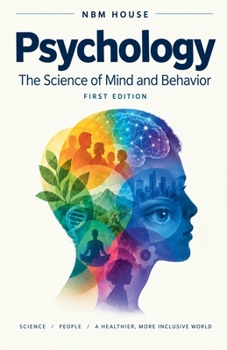
Psychology: The Science of Mind and Behavior

Psychology works best when it examines behavior across multiple levels of explanation at the same time. A behavior can have a neural mechanism, a learning history, a developmental origin, a social context, and a subjective meaning. This book trains readers to hold those explanations together and to ask which one the evidence actually supports.
Organized around five recurring questions-Mechanism, Development, Variation, Context, and Evidence-this comprehensive introduction covers the full modern curriculum:
- Foundations and the history of psychological thought
- Biological bases of mind (neurons, brain, sensation, consciousness, genes and evolution)
- Learning, memory, cognition, development, motivation, emotion, and personality
- Social psychology, culture, relationships, and group influence
- Psychological disorders and evidence-based treatment
- Applied psychology and the unsolved frontiers of the field
Every chapter includes Research in Focus case studies (with methods, findings, limitations, and replication status), Competing Explanations side-by-side, Methods and Data Literacy exercises, and Review & Assessment tools. Seven practical appendices cover statistics, how to read scientific papers, research ethics, psychological assessment, major theorists and timeline, a full glossary, and careers/graduate study paths.
Written for clarity without dumbing down, the book treats the replication crisis, WEIRD-sample problems, and the field's historical errors as part of the education rather than embarrassments to hide. Students leave not only knowing the major concepts but better at evaluating claims about human nature, recognizing the limits of intuition, and distinguishing a persuasive story from a well-supported one.
Ideal for introductory psychology courses, AP Psychology, self-study, and anyone who wants a rigorous yet readable map of the science of mind and behavior.
Related Subjects
PsychologyCustomer Reviews
ThriftBooks ® and the ThriftBooks ® logo are registered trademarks of Thrift Books Global, LLC
