


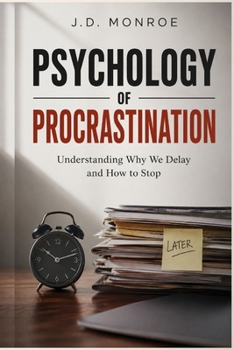
Psychology of Procrastination: Understanding Why We Delay and How to Stop

It is 1:47 in the morning, and a presentation that was assigned three weeks ago is still an empty slide. This scene, or a close variation of it, will be familiar to many people, not because they are lazy or poorly organized, but because procrastination rarely works the way common explanations suggest.
This book examines procrastination through psychology, neuroscience, and behavioral economics, moving past productivity advice to explain the actual mechanisms behind chronic delay. It covers the brain's uneven handling of present and future rewards, the specific fears, including fear of failure and fear of success, that make certain tasks feel threatening, and the way avoidance offers short-term relief at a long-term cost. A chapter on typology helps readers recognize their own pattern among six recognizable profiles, from the perfectionist to the overwhelmed procrastinator. Another chapter addresses the shame and self-criticism that keep the pattern in place, drawing on research into self-compassion as an alternative. The final chapter offers specific strategies matched to each pattern, including implementation intentions, environment design, and task-splitting.
Written for readers whose procrastination has become a source of ongoing frustration, at work, in school, or in personal projects, this book pairs a research-based explanation of the problem with practical steps for addressing it, organized around understanding first and strategy second..
Customer Reviews
ThriftBooks ® and the ThriftBooks ® logo are registered trademarks of Thrift Books Global, LLC
