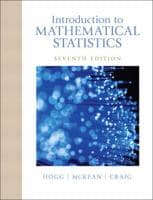
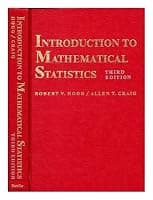
BOOK DESCRIPTION: Written by two leading statisticians, this applied introduction to the mathematics of probability and statistics emphasizes the existence of variation in almost every process, and how the study of probability and statistics helps us understand this variation. Designed for students with a background in calculus, this book continues to reinforce basic mathematical concepts with numerous real-world examples and applications to illustrate the relevance of key concepts. ? NEW TO THIS EDITION: The included CD-ROM contains all of the data sets in a variety of formats for use with most statistical software packages. This disc also includes several applications of Minitab? and Maple(tm). Historical vignettes at the end of each chapter outline the origin of the greatest accomplishments in the field of statistics, adding enrichment to the course. ? Content updates The first five chapters have been reorganized to cover a standard probability course with more real examples and exercises. These chapters are important for students wishing to pass the first actuarial exam, and cover the necessary material needed for students taking this course at the junior level. Chapters 6 and 7 on estimation and tests of statistical hypotheses tie together confidence intervals and tests, including one-sided ones. There are separate chapters on nonparametric methods, Bayesian methods, and Quality Improvement. Chapters 4 and 5 include a strong discussion on conditional distributions and functions of random variables, including Jacobians of transformations and the moment-generating technique. Approximations of distributions like the binomial and the Poisson with the normal can be found using the central limit theorem. Chapter 8 (Nonparametric Methods) includes most of the standards tests such as those by Wilcoxon and also the use of order statistics in some distribution-free inferences. Chapter 9 (Bayesian Methods) explains the use of the "Dutch book" to prove certain probability theorems. Chapter 11 (Quality Improvement) stresses how important W. Edwards Deming's ideas are in understanding variation and how they apply to everyday life. TABLE OF CONTENTS:? Preface Prologue ? 1. Probability 1.1 Basic Concepts 1.2 Properties of Probability 1.3 Methods of Enumeration 1.4 Conditional Probability 1.5 Independent Events 1.6 Bayes's Theorem ? 2. Discrete Distributions 2.1 Random Variables of the Discrete Type 2.2 Mathematical Expectation 2.3 The Mean, Variance, and Standard Deviation 2.4 Bernoulli Trials and the Binomial Distribution 2.5 The Moment-Generating Function 2.6 The Poisson Distribution ? 3. Continuous Distributions 3.1 Continuous-Type Data 3.2 Exploratory Data Analysis 3.3 Random Variables of the Continuous Type 3.4 The Uniform and Exponential Distributions 3.5 The Gamma and Chi-Square Distributions 3.6 The Normal Distribution 3.7 Additional Models ? 4. Bivariate Distributions 4.1 Distributions of Two Random Variables 4.2 The Correlation Coefficient 4.3 Conditional Distributions 4.4 The Bivariate Normal Distribution ? 5. Distributions of Functions of Random Variables 5.1 Functions of One Random Variable 5.2 Transformations of Two Random Variables 5.3 Several Independent Random Variables 5.4 The Moment-Generating Function Technique 5.5 Random Functions Associated with Normal Distributions 5.6 The Central Limit Theorem 5.7 Approximations for Discrete Distributions ? 6. Estimation 6.1 Point Estimation 6.2 Confidence Intervals for Means 6.3 Confidence Intervals for Difference of Two Means 6.4 Confidence Intervals for Variances 6.5 Confidence Intervals for Proportions 6.6 Sample Size. 6.7 A Simple Regression Problem 6.8 More Regression ? 7. Tests of Statistical Hypotheses 7.1 Tests about Proportions 7.2 Tests about One Mean 7.3 Tests of the Equality of Two Means 7.4 Tests for Variances 7.5 One-Factor Analysis of Variance 7.6 Two-Factor Analysis of Variance 7.7 Tests Concerning Regression and Correlation ? 8. Nonparametric Methods 8.1 Chi-Squa This description may be from another edition of this product.
It's the text book for a prerequisite class for our Statistics graduate program. This book introduces essential theories in Statistics. If you review some calculus and algebra, you will be find go through the book and the more you read the more you get from this book. I've read it three times and tried its examples. This book is not the most difficult one in Statistics yet but if you are not a math major, you may want to try something else.
0
★★★★★
a worthy revision
By Thriftbooks.com User, September 2, 2005
The 7th edition of this textbook represents a great revision of this old favorite: a separate chapter on the normal distribution and a new chapter on Bayesian statistics. Lots of new problems too. It seems like a lot of the reviews are from bitter students... yes, a course using this text requires a lot of math, but that is the only way you can fully understand probability and statistics!
0
★★★★☆
Not for application oriented. Better suited for math majors
By Thriftbooks.com User, August 17, 2004
I disagree with others on this one. The book is perhaps a little dry for non-mathematically oriented. If you are a math major this book will work out fine. Sometimes however, some of us who start out as math majors at the undergrad level will come to a point where we realize pure math is no longer our forte. I suppose that is when applied fields like engineering, economics or finance start looking more promising than mathematics. This distinction is however an important one. If you are into applied fields, the emphasis is on learning what methods to use and being able to solve the equations well. Theories, proofs and analysis are often nice and may be even elegant. But most likely they are an over kill. Tools and techniques are what are going to save the day. If you find yourself in this group, this book is not an easy read. I think there are excellent alternatives for those looking for books with better examples, illustrations etc., I am planning to continue in math/statistics beyond college level. So far I have not found too many things to complain about this book. It does a pretty good job of explaining the theory part without attempting to skip over the hard sections. That is why I do not think it deserves the harsh ratings it has received from other readers. The authors acknowledge that much when they say that this book is useful when used as a text for a two semester long course even for math majors. Hope this helps. Cheers
0
★★★★★
A good book on statistical inference
By Thriftbooks.com User, September 15, 1999
This is a wonderful book to introduce Probability and Statistical Inference to students with some background in calculus. The contents of the book start with summary and display of data, then gradually move to estimation, hypothesis testing, linear model and non-parametric methods. Several lists of distributions, confidence intervals and tests of hypothesis are given in the book. Many interesting examples are chosen to introduce some abstract concepts in probability and statistics. This book is not only useful as a text book but also useful as a reference book for further study.