


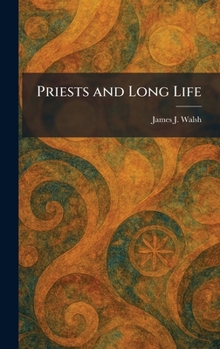
Priests and Long Life

"Priests and Long Life" explores the intersection of religious vocation and physical health through a detailed examination of clerical longevity. Written by the esteemed physician and historian James J. Walsh, the work investigates the statistical reality that Catholic priests frequently live longer lives than their lay counterparts. Walsh provides a comprehensive analysis of the environmental, psychological, and lifestyle factors inherent in the priesthood-such as routine, intellectual discipline, and spiritual purpose-and how these elements contribute to an extended life expectancy.
The book serves as a fascinating sociological and medical inquiry, challenging contemporary assumptions about the stresses of the religious life. By reviewing data from various dioceses and religious orders, Walsh highlights the health benefits of moderation and communal support. "Priests and Long Life" offers valuable insights into the science of aging and the historical perspective on how a life of service impacts the human body and mind. This study remains an important contribution to the fields of religious history, gerontology, and the history of medicine.
This work has been selected by scholars as being culturally important, and is part of the knowledge base of civilization as we know it. This work was reproduced from the original artifact, and remains as true to the original work as possible. Therefore, you may see the original copyright references, library stamps (as most of these works have been housed in our most important libraries around the world), and other notations in the work.
This work is in the public domain in the United States of America, and possibly other nations. Within the United States, you may freely copy and distribute this work, as no entity (individual or corporate) has a copyright on the body of the work.
As a reproduction of a historical artifact, this work may contain missing or blurred pages, poor pictures, errant marks, etc. Scholars believe, and we concur, that this work is important enough to be preserved, reproduced, and made generally available to the public. We appreciate your support of the preservation process, and thank you for being an important part of keeping this knowledge alive and relevant.
Customer Reviews
ThriftBooks ® and the ThriftBooks ® logo are registered trademarks of Thrift Books Global, LLC
