


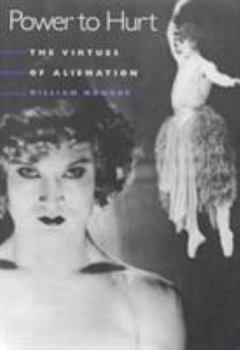
Power to Hurt: The Virtues of Alienation

William Monroe
addresses what William J. Bennett ignores in The Book of Virtues:
How do readers use literature as "equipment for living"?
Tackling modernism
and postmodernism, Monroe outlines "virtue criticism," an alternative
to current theory. Focusing on works by T. S. Eliot, Vladimir Nabokov,
and Donald Barthelme, he demonstrates that these alienistic texts are
not just filled with belligerence but are also endowed with virtues, such
as trust and the promise of solidarity with the reader. By considering
these vital texts as responses to personal situations and institutional
practices, Monroe brings literature back to the common reader and shows
how it offers functional responses to the dysfunctional situations of
modern life.
Readers interested
in literary criticism, American culture, and the relationship between
ethics and literature will be fascinated by virtue criticism and this
fresh look at the virtues and vices of alienation.
Chosen as a Choice Magazine's Outstanding Academic Book for 1999.
addresses what William J. Bennett ignores in The Book of Virtues:
How do readers use literature as "equipment for living"?
Tackling modernism
and postmodernism, Monroe outlines "virtue criticism," an alternative
to current theory. Focusing on works by T. S. Eliot, Vladimir Nabokov,
and Donald Barthelme, he demonstrates that these alienistic texts are
not just filled with belligerence but are also endowed with virtues, such
as trust and the promise of solidarity with the reader. By considering
these vital texts as responses to personal situations and institutional
practices, Monroe brings literature back to the common reader and shows
how it offers functional responses to the dysfunctional situations of
modern life.
Readers interested
in literary criticism, American culture, and the relationship between
ethics and literature will be fascinated by virtue criticism and this
fresh look at the virtues and vices of alienation.
Chosen as a Choice Magazine's Outstanding Academic Book for 1999.
Format:Paperback
Language:English
ISBN:025206657X
ISBN13:9780252066573
Release Date:January 1998
Publisher:University of Illinois Press
Length:256 Pages
Weight:1.20 lbs.
Dimensions:0.8" x 6.0" x 8.9"
Customer Reviews
1 rating
Hidden connection: Colombine High School, Littleton massacre
Published by Thriftbooks.com User , 26 years ago
This book deals with the vices as well as the virtues of alienation. The massacre at Colombine High School in Littleton, Colorado, would seem be a manifestation of the vices of alienation, resistance, or disaffection. The author says, without imaginative strategies that shape the motives of alienation in healthy ways, we are doomed to see them manifested in pathological ways. Alienistic literature is still in the public domain, a gesture of respect (for the audience), not of violence. The author sees such works as antidotes to the violent or otherwise pathological impulses of civilization's "discontents."
Copyright © 2026 Thriftbooks.com Terms of Use
| Privacy Policy | Do Not
Sell/Share My Personal Information | Cookie Policy | Cookie Preferences | Accessibility Statement
ThriftBooks® and the ThriftBooks® logo are registered trademarks of Thrift Books Global, LLC
ThriftBooks® and the ThriftBooks® logo are registered trademarks of Thrift Books Global, LLC
