


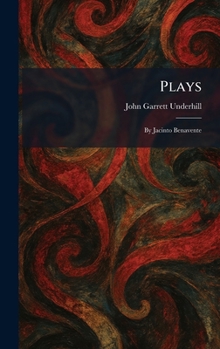
Plays: By Jacinto Benavente

"Plays by Jacinto Benavente" offers a compelling introduction to the dramatic genius of one of Spain's most celebrated playwrights and the 1922 recipient of the Nobel Prize in Literature. This collection, translated by John Garrett Underhill, showcases the versatility and psychological depth that defined Benavente's contribution to the modern theater. Moving beyond the traditional conventions of the Spanish stage, these plays explore complex themes of social artifice, human morality, and the intricate dynamics of class and passion.
Benavente's work is characterized by its sharp dialogue and keen observation of the human condition. Whether through biting social satire or poignant emotional drama, he captures the shifting landscape of early 20th-century Spanish society. His influence on Western drama is profound, as he bridged the gap between classic realism and the burgeoning modernist movements of his time. This anthology provides readers and students of theater with an essential look at a master of the stage whose legacy continues to resonate within the canon of world literature.
This work has been selected by scholars as being culturally important, and is part of the knowledge base of civilization as we know it. This work was reproduced from the original artifact, and remains as true to the original work as possible. Therefore, you may see the original copyright references, library stamps (as most of these works have been housed in our most important libraries around the world), and other notations in the work.
This work is in the public domain in the United States of America, and possibly other nations. Within the United States, you may freely copy and distribute this work, as no entity (individual or corporate) has a copyright on the body of the work.
As a reproduction of a historical artifact, this work may contain missing or blurred pages, poor pictures, errant marks, etc. Scholars believe, and we concur, that this work is important enough to be preserved, reproduced, and made generally available to the public. We appreciate your support of the preservation process, and thank you for being an important part of keeping this knowledge alive and relevant.
Customer Reviews
ThriftBooks ® and the ThriftBooks ® logo are registered trademarks of Thrift Books Global, LLC
