


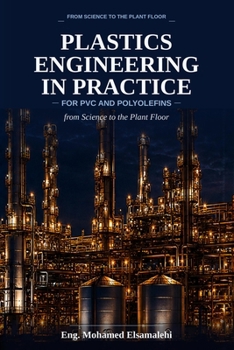
Plastics Engineering in Practice: for PVC and Polyolefins - from Science to the Plant Floor

Plastics Engineering in Practice bridges the gap between polymer science and the daily reality of the production floor. Written from more than 30 years of hands-on industrial experience, it turns complex theory into practical, usable knowledge for anyone working with PVC and polyolefins.
Plastics are everywhere - in the products we use, the systems we rely on, and the industries that shape our world. Behind every high-quality plastic product lies a demanding journey of science, engineering, and real-world know-how. This book takes you on that journey, focusing on PVC, polyethylene (PE), and polypropylene (PP) - three of the most widely used polymers in the industry - and showing how theory is transformed into efficient, reliable, and cost-effective production.
From raw materials and compounding to extrusion, injection molding, and troubleshooting, every chapter is grounded in real production experience. Instead of abstract equations alone, you get the practical insight needed to run stable processes, reduce waste, and solve the problems that actually stop production lines.
Inside this book you will find:
The fundamentals of polymer structure, additives, and behavior - explained for engineersRheology and melt flow behavior, and why they control everything downstreamScrew and die design principles for extrusionInjection molding process control and optimizationSystematic troubleshooting of common production defectsMaterial selection guidance for PVC and polyolefinsReal case studies and proven solutions drawn from decades on the plant floorWhether you are a process engineer, technician, quality specialist, or plant manager, this book is a practical companion designed to help you improve performance, cut costs, and achieve consistent results.
Written by Eng. Mohamed Elsamalehi - an industrial executive with over 30 years of experience managing and commissioning plastics factories across Egypt, Libya, Saudi Arabia, and the Gulf, and holder of a Master's degree in Applied Chemistry (Polymers) - this is the reference he wished he had when he started on the plant floor.
If you want to understand not just how plastics are processed, but how to process them well, this book belongs on your bench.
Customer Reviews
ThriftBooks ® and the ThriftBooks ® logo are registered trademarks of Thrift Books Global, LLC
