


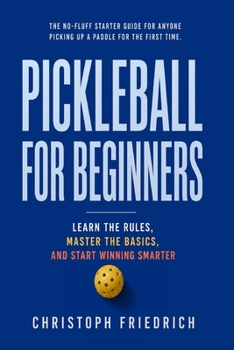
Pickleball for Beginners: Learn the Rules, Master the Basics, and Start Winning Smarter

Pickleball for Beginners is a practical guide for new players and anyone playing at roughly the 2.5 to 3.5 level. It explains the rules and scoring that trip up new players, the kitchen faults that cost easy points, and the few shots worth building first: the serve, the return of serve, the third shot drop, the dink, volleys and resets. Then it shows you how to use them in doubles, with simple strategy and drills you can take to your next game.
If you have played pickleball once, you already know the feeling. An hour in, you are laughing, sweating and already planning the next game. Then somebody who barely seems to move beats you without ever looking like they are trying, and you come off the court wondering what you missed.
Here is what nobody mentions at the courts. Most beginners do not lose points. They give them away, with a ball hit a little too hard, a step taken a moment too late, or a shot chosen when the smarter play was to wait. This book fixes those habits one at a time, in plain language, and it is honest about what matters at your level. In one coach's count of two 3.5-level gold medal matches, missed returns of serve accounted for just under 30 percent of all points, while the third shot drop everyone practices produced 13 percent. So the return gets real attention here, and you finish knowing where your practice time should go.
Who This Book Is ForYou have just started playing, or you have been at it for a few months and feel stuck around 2.5 or 3.0. You can get through a game, but you still lose track of the score, step into the kitchen after a volley, or watch your drop float up and get put away. You mostly play doubles, often at open play, and you would like to be the partner people are glad to draw.
No coaching background needed. Every chapter ends with a short Recap you can read right before you play.
What's InsideThe rules that cost new players the most points, from the two-bounce rule and kitchen faults to legal serves and scoringA serve you can count on, and a deep return that gets you to the kitchen lineWhen to drop and when to drive the third shot, and what to do the moment after you hit itDinking, volleys, blocks and resets, built on one simple grip and a ready position you keep returning toDoubles strategy: moving with your partner, covering the middle, calling the ball and knowing when stacking helpsShot selection, patience and reading your opponents, so you stop chasing winners that are not thereHow to handle a bad miss, and how to move around the court without risking a fallOpen play and court etiquette, from the paddle rack to line callsWhat paddle to buy, how to warm up, when a lob is worth trying, and a first look at singlesDrills for a partner or a wall, plus a ninety-day plan that tells you what to practice firstCustomer Reviews
ThriftBooks ® and the ThriftBooks ® logo are registered trademarks of Thrift Books Global, LLC
