


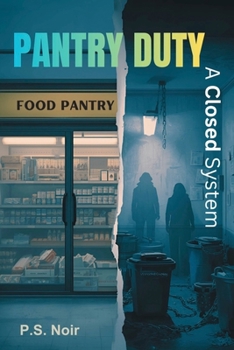
Pantry Duty: A Closed System

Some stories demand to be told.
This is one of them.
Leo Pritchard just wants to do his job. Stock shelves at The Harrison House food pantry. Help families who wake at 4 AM hoping for meat before the workers clean out the protein box. Keep his head down despite the Tourette's syndrome that makes his body betray him at the worst moments.
But when he witnesses systematic theft-workers loading carts while hungry families wait, premium cuts disappearing into personal vehicles, manifests adjusted to hide the evidence-Leo faces an impossible choice: stay silent and keep his minimum-wage job, or speak up and risk everything.
With his Tourette's making him easy to dismiss and easier to mock, Leo finds an unlikely ally in Elliot Hayes, an accountant who's seen the numbers that don't add up. Together, they compile irrefutable evidence and deliver it to Im Soon-bok, a prominent Korean-American civil rights attorney who's built her career prosecuting nonprofit fraud.
With Elliot Hayes, an unlikely ally from accounting, Leo begins documenting the corruption. Video footage. Financial records. Irrefutable proof delivered to a civil rights attorney who's built a career prosecuting nonprofit fraud.
It should be enough.
It should matter.
But in the machinery of institutional corruption, individuals are disposable. Systems adapt. And sometimes doing the right thing costs more than anyone should have to pay.
Set against the backdrop of Dallas's charitable food distribution network, Pantry Duty: A Closed System is a psychological thriller about moral courage, neurodivergence, and what happens when speaking truth to power means speaking to people who've already decided not to listen. For readers who loved Stephen King's exploration of institutional evil in The Institute and Rita Hayworth and Shawshank Redemption-a story where the real horror isn't supernatural. It's human. It's systemic. And it's happening right now. The theft is real. The mockery of hungry families is real. The complaints filed and ignored are real. Only the names have been changed, and one crucial detail amplified to show what institutional indifference does to those who refuse to look away. CONTENT NOTE: This novel contains strong language (including coprolalia related to Tourette's syndrome), depictions of institutional corruption, psychological manipulation, workplace violence, and themes of systemic injustice. Intended for mature readers. This book matters. This book WANTED telling.- P.S. Noir
Some witnesses stay silent.
Some speak up and pay the price.
Leo Pritchard tried to do the right thing.
Customer Reviews
ThriftBooks ® and the ThriftBooks ® logo are registered trademarks of Thrift Books Global, LLC
