


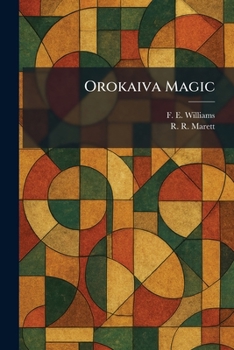
Orokaiva Magic

"Orokaiva Magic" is a seminal ethnographic study by F.E. Williams, exploring the complex spiritual and social structures of the Orokaiva people in Papua New Guinea. This scholarly work delves into the intricate belief systems that govern the daily lives and communal rituals of the tribe, providing a detailed examination of magic, sorcery, and the supernatural.
The text documents the various manifestations of magic, from garden spells to the more ominous practices of taro cults and individual sorcery. Williams provides profound insights into how these beliefs function as a means of social control, psychological assurance, and cultural identity. The work serves as a foundational text for understanding Melanesian culture and the development of religious thought in the early twentieth century.
By analyzing the symbolic significance of rituals and the role of the magician within the community, "Orokaiva Magic" remains an essential resource for students of cultural anthropology and those interested in the indigenous traditions of the South Pacific. It captures a vital documentation of the rich oral and ritualistic heritage of the Orokaiva, preserving their customs and worldviews through rigorous field research and observation.
This work has been selected by scholars as being culturally important, and is part of the knowledge base of civilization as we know it. This work was reproduced from the original artifact, and remains as true to the original work as possible. Therefore, you may see the original copyright references, library stamps (as most of these works have been housed in our most important libraries around the world), and other notations in the work.
This work is in the public domain in the United States of America, and possibly other nations. Within the United States, you may freely copy and distribute this work, as no entity (individual or corporate) has a copyright on the body of the work.
As a reproduction of a historical artifact, this work may contain missing or blurred pages, poor pictures, errant marks, etc. Scholars believe, and we concur, that this work is important enough to be preserved, reproduced, and made generally available to the public. We appreciate your support of the preservation process, and thank you for being an important part of keeping this knowledge alive and relevant.
Customer Reviews
ThriftBooks ® and the ThriftBooks ® logo are registered trademarks of Thrift Books Global, LLC
