Skip to content
ISBN: 0879757132
ISBN13: 9780879757137

On the Wild Side

$8.89List Price: $34.98
Save $26.09!
ISBN: 0879757132
ISBN13: 9780879757137
Formats

Conditions

A read copy, but remains in excellent condition.

Formats

Conditions

*Best Available: (ex-library)

A read copy, but remains in excellent condition.

See all 3 editionsfrom $7.79

Book Overview

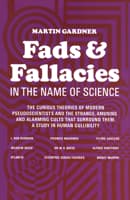
"I have always been intrigued by fringe science," writes Martin Gardner in the preface to this book, "perhaps for the same reason that I enjoy freak shows and circuses. Pseudoscientists, especially the extreme cranks, are fascinating creatures for psychological study. Moreover, I have found that one of the best ways to learn something about any branch of science is to find out where its crackpots go wrong." A unique combination of horse sense and drollery has made Martin Gardner the undisputed dean of the critics of pseudoscience. This bountiful collection of essays and articles will be wholeheartedly greeted by Gardner's fans, as well as by new readers. This collection of articles - many of which first appeared in the Skeptical Inquirer, the New York Review of Books, and Free Inquiry - explores pseudoscience and strange religious beliefs with the author's trademark wit and verve. Destined to be a classic of skeptical literature, this book covers a wide range of topics - including UFOs, rainmaking, ghosts, the Big Bang, ESP, Oral Roberts, as well as the early history of spiritualism and today's bizarre "trance channeling" cults. This description may be from another edition of this product.
Format:
Hardcover
Language:
English
ISBN:
0879757132
ISBN13:
9780879757137
Publisher:
Prometheus Books, Publishers
Length:
257 Pages
Weight:
1.20 lbs.
Dimensions:
9.8″ × 1.0″ × 6.5″
Education & ReferenceFictionLiterature & FictionMathematicsOccultReligionReligion & SpiritualityScienceScience & MathScience & ScientistsScience & TechnologySpirituality

More by Martin Gardner

Customer Reviews

4 customer ratings | 4 reviews
Write a Review

Somewhat thin and dated, not Gardner's best work

Martin Gardner is the best of the psuedoscience debunkers out there and his Fads and Fallacies in the Name of Science is a perennial favorite. (I assign it to my freshman seminar students in philosophy of science.) This volume is thinner and seems more dated somehow, probably the pseudoscience topics didn't stay current. Sure there's good stuff here on Crowley and the Gaia Hypothesis, but Oral Roberts surely needs no more exposure and Rhine has faded away. We've moved past Reagan's reliance on astrology through the far scarier Bush years. I'd recommend this only after the other Gardner books. It's good, but far from his best material.

0

Facts is stubborn things

Martin Gardner, who grew up in an age when journalism was both more rambunctious and more serious than today's, is always fun to read. And he holds up well. An earlier reviewer did not like his skepticism about the Gaia hypothesis. But who, in the 21st century, still takes Lovelock seriously? Only the kind of fruits and nuts that Gardner crunched again and again over half a century. "On the Wild Side" is a collection of essays and reviews, primarily from Skeptical Inquirer and The New York Review of Books, of dozens of life's also-rans, who ignored, distorted, made up or ran from facts. Here he skewers targets ranging from J.B.S. Haldane, once England's greatest geneticist, whose fatheaded communism led him to defend Stalin and Lysenkoism; to Jacques Benveniste, who thought an experiment would prove the validity of homeopathy but ending up proving only that he was dishonest and that homeopathy was just the kind of nonsense the rationalists had always said it was.

0

Fascinating excursions into science and pseudoscience

In this vintage collection of essays and reviews Gardner goes after pseudoscience and seeks to enlighten us about various delusions and mistaken ideas in science. As usual the old guy displays a most engaging and exciting style while countenancing no fuzzy thinking and especially no BS. He begins with parapsychologist Joseph Rhine of Duke University, who, half a century ago, tried to establish extrasensory perception. One recalls that Rhine used cards with five different symbols that one person would concentrate on while another at a distance would attempt to guess. Dr. Rhine used a statistical analysis of hits and misses to demonstrate that extrasensory perception had taken place. Last I heard, some decades ago, Rhine's methods and stats were considered highly suspect, and he and his work have gradually faded into oblivion. Now Martin Gardner adds a further criticism: Rhine failed to expose cheating in experiments that he knew about. Rhine thought that no good purpose would be served by exposing the maleficence and those practicing it. Gardner argues in this essay, "The Obligation to Disclose Fraud" that the contrary is a better rule, if for no other reason than not to disclose fraud is to mislead later researchers.The second essay, "Occam's Razor and the Nutshell Earth," deals with the strange, but apparently non-refutable idea that the earth is hollow and we live on the inside. It seems that it is mathematically possible to describe such a universe. Gardner asks on page 19, "Why then does science reject it?" The answer lies in Occam's Razor, one of the truly beautiful ideas in science, which states that given alternative explanations of phenomena, we must choose the one that is simplest. In this regard I must mention again my (fanciful!) idea that it is not space-time that is expanding, but matter that is contracting. I wonder if it is possible to chose which is really correct, or if such a choice has any meaning--or if, as Gardner's text might suggest, Occam's Razor might be applied.Other essays deal with such delectable subjects as President Reagan and First Lady Nancy's reliance on astrologers for the timing of certain presidential events; the scientific basis of homeopathy, or actually, the lack thereof; geneticist (and author of the much anthologized essay, "On Being the Right Size") J. B. S. Haldane's embarrassing support of Stalin and the crackpot genetics of Lysenko; some stuff on Linus Pauling and the very weird Wilhelm Reich, etc. My favorite essays were on Frank Tipler's fantastic Omega Point "theology," which doesn't sit well with Gardner, and the essay "Relativism in Science" (Chapter 10), remarkable for the fairness that Gardner extends by reproducing astronomer Bruce Gregory's very effective rebuttal to Gardner's criticism of his book, Inventing Reality: Physics as a Language (1989).But where I find myself in rare disagreement with Gardner is in his treatment of James E. Lovelock's Gaia hypothesis in the chapter en

0

The Skepticial view on several subjects

Martin Gardner takes the skeptical view on several subjects in this book. He critizes many in the paranormal and Christian fundamentist movements. Basically, he treats them almost as symoptioms that are caused by the larger problem of people looking for answers without knowing what the heck the question is. So, they grab onto irrational beliefs in paranormal or religious faith. You challange both the believers in the paranormal or those with fundamentist religious belief systems and you get pretty much the same standard response. Things like "you can't disprove this" or "and how would you know?" stuff that is more or less, lacking in real intellicual thought or commentary. Gardner exposes them for what they are: frightened little people who don't want to think for themselves.

0