Dieses historische Buch kann zahlreiche Tippfehler und fehlende Textpassagen aufweisen. Käufer können in der Regel eine kostenlose eingescannte Kopie des originalen Buches vom Verleger herunterladen (ohne Tippfehler). Ohne Indizes. Nicht dargestellt. 1910 edition. Auszug: ...die qualitativ gleich sind, aber quantitativ einen wesentlich höheren Grad erreichen als in der ersten Schwangerschaft. In der Gegend dcsHilus, in der hinteren Grenzschichte des Vorderlappens (Peremeschkos.Markschichte, Region interglobulaire nach Thaon) findet sich nicht konstant, doch häufig, eine mit einer einfachen Lage von kubischen Zellen, seltener mit zylindrischen Flimmerzellen besetzte Spalte, deren Höhlung leer oder mit einer durch Hämatoxylin blaßblau gefärbten Masse erfüllt sein kann. Sie bildet den Rest der embryonalen Hypophysenhöhle, Überdies kommen in dieser Region noch zwei Arten von Bläschen oder Follikeln vor. Neben und häufiger noch an Stelle der länglichen Spalte sieht man rundliche, mit Zylinderepithel ausgekleidete und einer amorphen Masse erfüllte Bläschen, die wahrscheinlich aus den Einstülpungen der Hinterwand der embryonalen Hypophysenhöhle hervorgegangen sind. Eine zweite Art von Bläschen derselben Gegend ist erheblich größer und erinnert in ihrem Aussehen und nach dem kolloiden Verhalten an die Follikeln der Schilddrüse. Die Bläschenwand besteht aus kubischen, schlecht färbbaren Zellen mit großen Kernen; das Lumen des Bläschens ist zuweilen mit einer amorphen, homogenen Masse erfüllt. Häufig sieht man neben einer fein granulierten, basophilen noch eine eosinophile, dem Schilddrüsenkolloid ähnliche Substanz. Solche Follikeln findet man gewöhnlich in der hinteren Markschichte, zuweilen allerdings auch noch im Zentrum des Vorderlappens. Gentes und Pirrone konnten mit Hilfe der Golgischen Methode in der Wand dieser... This description may be from another edition of this product.
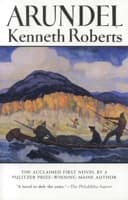
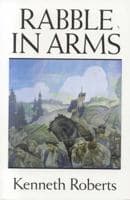
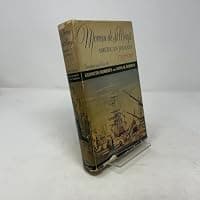
Oliver Wiswell is an excellent historical novel that, along with Rabble in Arms, Arundel, and The Battle of the Cowpens (all by Roberts) provides a comprehensive view of the American Revolution. Reading all 4 books, one learns a tremendous amount of history about some of the battles fought first in the North at Quebec, Lake Champlain, and Saratoga, and then in the South at the Cowpens and the implications it had for the final American victory at Yorktown. The reader also gets an excellent insight into the viewpoints of the British, Loyalists, and Patriots during the conflict. So, I strongly recommend that all 4 books be read together (indeed, back in 1976 they were issued together as "A Reader on the American Revolution.") So, why did I add "But..." to my review title? Because I emphasize that the only way to fully understand Oliver Wiswell is to first read the other novels. In the book, Oliver is the Loyalist son of a well-to-do son of a rich Boston attorney. The society he comes from is the country's aristocracy of the time... rich, well educated, supremely disdainful of the "rabble" that is fighting for the American cause during the war. First read Rabble in Arms to get an understanding of the tremendous suffering and deprivation the Patriots suffered during the Revolution with incredible selflessness. Learn how they fought against all odds for their country, with little or no pay, often times with poor leadership and little food, and no personal gain while facing thousands of professional, well trained and armed soldiers and foreign mercenaries (not to mention Indians that were capable of quite savagely killing and scalping entire families or defenseless women like Jennie McCrae). Then read Oliver Wiswell; I guarantee you that Oliver's constant disdain for the "scarecrows," the "rabble," the "pseuodo-soldiers" will grate on your nerves the more often he repeats such terms. Of course rich Loyalists had no time for the idea of American independence; they benefited from the the British way of running the colonies. It were the "rabble" that suffered under the trade and settlement restrictions that the British sought to impose on the colonies for the benefit of their own economy, and to see to it that they and not the Americans controlled the settlement of the West. If men like Hancock were "failed" businesmen and "smugglers," it was due to British control of America's international trade that insisted that America not manufacture its own goods, and purchase only British made goods. If there was ill-clothed, un-shod "rabble" in America, it was because of such policies. Men like Hancock and Sam Adams recognized the eternal poverty many Americans would suffer unless those policies were overturned. They gambled their very lives on the behalf of the "rabble," when they could just as easily have settled comfortably into the upper classes along with Wiswell simply by continuing to smuggle goods. Hancock's signature on the Declaration o
1
★★★★★
Oliver Wiswell
By Thriftbooks.com User, April 1, 2002
Once again I'm admitting to bias in my review, but this is another solid novel by the premier novelist of the colonial American period. Roberts writes of young Wiswell as he faced the struggle of a world he did not wish to see changed. Wiswell was a Loyalist and suffered much for his beliefs. Too many novelists (and indeed some historians) write off the tribulations of the Loyalists because of so-called "patriotism." But patriotism is not so clearly defined. Wiswell believed he was acting out of patriotism when he made the desicions he did.This book is another offering from a writer who can literally place the reader into the pages of his book and keep you there until the last page. The characters of the several books are cross-referenced enough so one gets the impression of a larger historical community. This allows Roberts to maintain continuity yet keeps him from writing in a historical vacuum. The reader will follow Wiswell's journey from New England to the southern colonies and ultimately beyond the borders of the United States.With any luck, this and the rest of Roberts' books will never go out of print.
2
★★★★★
a tremendous historical novel
By Thriftbooks.com User, September 3, 2001
Wow. I wish I could give this book six stars. I wish I could demote every five-star rating I've given to a book or a CD or a DVD so that I could give OLIVER WISWELL a unique five-star rating, thus marking its place as one of the best books I've ever read, period. Reading this book was an epiphany. Having an undergraduate history minor, and having taken courses in historiography, I was used to the idea of reading history while keeping in mind that it was written by the victors and by people with their own agendas; but never has that principle been so real, and so vivid, as in the reading of this book. In all my years of school I never learned so much about the Revolutionary War, never cared so much about the war, and never read a book that made me want to visit New Brunswick, Canada.The novel begins in April 1775, when the protagonist is ejected from his home by American rebels, and ends in 1783, when the war has ended and he and other Loyalists leave their home country to establish roots in Canada. In between, the author manages to have Oliver plausibly meeting some of the most interesting characters involved (General Howe, John Vardill, John Cruger, etc) and at the scene of many of the war's most interesting events (the Battle of Bunker (Breed's) Hill, the rebels' surrender of New York, the intrigue-ridden courts of Paris and London, the trek to Kentucky by fleeing Tories along Boone's Wilderness Trail, the siege of Ninety Six and Benedict Arnold's campaign in the south, and the Loyalists' post-war settlement in New Brunswick, Nova Scotia, Gibralter, Bermuda and the Bahamas). Furthermore, we become involved in the personal lives of several main characters: the young Mr. Wiswell, his resourceful and loyal friend Tom Buell, Sally Leighton -- the rebel girl Oliver leaves behind, and the irascible Mrs. Belcher Byles. In the course of the novel we come to have genuine affection for these characters.I hated for this book to end. I teared up through the last ten pages, more fully comprehending the pain and torment of America's first civil war and more fully appreciating the suffering and loss of people on both sides of this horrible ordeal.If you are willing to read 800+ pages you will be rewarded not only by a remarkable personal story, but you will undoubtedly know more about the Revolutionary War than you dreamed possible. Kenneth Roberts was a remarkable author.
3
★★★★★
Different View of History
By Thriftbooks.com User, September 12, 2000
Without doubt, this is one of the best historical novels I have ever read. Since there is always 2 sides to a question, this book gives you the other side of the American Revolution -- the side you never read in history books or are taught in school. Roberts doesn't have an axe to grind -- he just tells the story like a "Tory" or "Royalist" sees it. This information is long overdue.
1
★★★★★
OLIVER WISWELL: PERSPECTIVE
By Thriftbooks.com User, May 22, 2000
Unlike most books about US history, this one is told from the POV of a Loyalist and the terrible injustices suffered under the hands of the "Rabble In Arms" in their fight for Independence. Kenneth Roberts preciseness in researching US history adds all the color and background necessary for even the most inscrutable history buff while weaving wonderful characters whose every word hangs in the readers minds months after the book has been closed. It clearly illustrates the way neighbour turned against neighbour, even brother against brother, all believing in their cause, all willing to fight to the death to win. The opening scene shows the senseless brutality committed by many when obcessed with a cause and blind to justice. Tom Buell is my favorite character because of his resourcefulness and precousesness. Oliver Wiswell has the true character motivated by truth and honor that should be a roll model for all Americans. This book is a MUST READ on anyone's list and should be required reading in all schools. BRAVO, KENNETH ROBERTS! and, THANK YOU.