


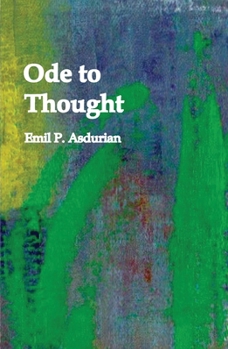
Ode to Thought

The book explores the interconnectedness of philosophy, poetry, art, and science, emphasizing the unity of knowledge, consciousness, and the human pursuit of truth through historical, literary, and philosophical perspectives.
Philosophical Foundations and Historical Perspectives
The book discusses the evolution of human knowledge, highlighting Hume's role in establishing the modern map of understanding, from primitive precepts to complex logical analysis, and Goethe's view on the unity of poet and philosopher.
Hume laid the groundwork for modern understanding of mental processes.Early thinkers linked names, places, and events to map knowledge.Goethe believed poets and philosophers share a core of creative ideas.The development of thought spans from primitive to scientific and philosophical realms.The Unity of the Universe and Human Consciousness
The narrative emphasizes the universal unity across material, organic, and psychological realms, supported by scientific theories and archaeological findings.
The universe's unity is reflected from the Big Bang to Quantum Physics.Material world, organic life, and psyche are interconnected.Archaeological discoveries reveal subconscious depths.The pursuit of truth involves patience, love, and curiosity.Poetry as a Reflection of Human Depth and Discovery
Poetry is portrayed as a vital expression of human feelings, thoughts, and the divine, evolving alongside scientific and artistic advancements.
Poetry flows beyond traditional melodic forms to content-driven expression.It captures deep thoughts, feelings, and human essence.The evolution of artistic expression parallels Impressionist painting's shift to color and emotion.Poetry aims to discover and express the divine within human depth and future potential.Related Subjects
PhilosophyCustomer Reviews
ThriftBooks ® and the ThriftBooks ® logo are registered trademarks of Thrift Books Global, LLC
