


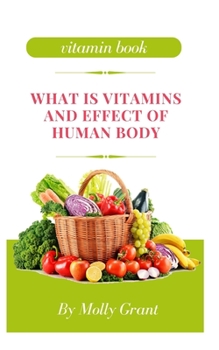
What Is Vitamins and Effect of Human Body
No Customer Reviews

Vitamins they are low molecular weight organic compounds that are needed in small quantities by the body, but cannot be synthesized there or are produced in limited quantities. These substances do not perform a plastic function, but they influence numerous metabolic processes and are often precursors of organic cofactors (coenzymes, including prosthetic groups), or, more rarely, precursors of signaling substances. The need for vitamins depends on the type of organism and age, sex and physiological conditions such as pregnancy, breastfeeding, exercise and nutrition. It should be emphasized that vitamin is not a chemical concept: it has a purely physiological meaning. The body's daily need for vitamins is covered by rational nutrition, and hypovitaminosis leads to malnutrition, malnutrition, malabsorption or inhibition of bacterial synthesis (vitamins K, B12, H) and, in severe cases, to beriberi. Vitamin deficiency leads to the appearance of specific metabolic disorders with characteristic clinical manifestations, resulting in damage to the skin, blood cells and nervous system. The result of an overdose of vitamins hypervitaminosis with symptoms of poisoning only for vitamins A and D. Pour some vitamins that can be deposited in the body (A, D, E, B12). The nomenclature of the vitamins is based on the use of capital letters of the Latin alphabet with subscripts.
Format:Paperback
Language:English
ISBN:B0BF3G9ZDD
ISBN13:9798352769805
Release Date:September 2022
Publisher:Independently Published
Length:94 Pages
Weight:0.22 lbs.
Dimensions:0.2" x 5.0" x 8.0"
Customer Reviews
0 rating
Copyright © 2026 Thriftbooks.com Terms of Use
| Privacy Policy | Do Not
Sell/Share My Personal Information | Cookie Policy | Cookie Preferences | Accessibility Statement
ThriftBooks® and the ThriftBooks® logo are registered trademarks of Thrift Books Global, LLC
ThriftBooks® and the ThriftBooks® logo are registered trademarks of Thrift Books Global, LLC
