


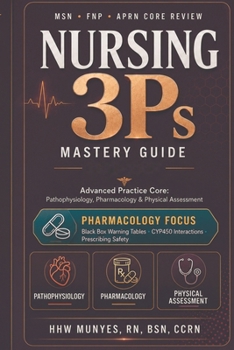
Nursing 3Ps Mastery Guide: Advanced Practice Core: Pathophysiology, Pharmacology & Physical Assessment

Graduate nursing students are expected to master three demanding clinical foundations at once: advanced pathophysiology, advanced pharmacology, and advanced health assessment. Weakness in any one of the Nursing 3Ps can impair diagnostic reasoning, prescribing safety, and board-exam performance.
Nursing 3Ps Mastery Guide delivers a dense, clinically precise review of the Advanced Practice Core for MSN, FNP, and APRN learners. Organized by physiological systems, drug classes, and examination domains, it connects disease mechanisms to physical findings, differential diagnosis, treatment selection, monitoring, and escalation.
Inside, you will find: Eight system-based pathophysiology chapters covering cellular injury, cardiovascular remodeling, endocrine feedback failure, renal and acid-base disorders, respiratory failure, neurological dysfunction, gastrointestinal disease, and immune/hematologic dysregulationEight pharmacology chapters covering pharmacokinetics, cardiovascular agents, antimicrobials, endocrine therapies, neuropsychopharmacology, respiratory and GI drugs, controlled substances, pain management, and toxicologyEight advanced assessment chapters covering interviewing, HEENT, cardiovascular, respiratory, abdominal, musculoskeletal, neurological, dermatological, and genitourinary/reproductive assessmentA visually distinct pharmacology focus with Black Box Warning Tables, CYP450 interaction matrices, contraindication screens, and prescribing-safety checkpointsLifespan comparison tools, homeostatic failure matrices, diagnostic laboratory and imaging grids, differential-diagnosis frameworks, and SOAP/telehealth templates60 original scenario-based multiple-choice questions with answer keys and detailed biological, biochemical, pharmacological, and diagnostic rationalesConcise red-flag guidance for shock, respiratory failure, neurological emergencies, medication toxicity, and urgent escalationUse this guide to reinforce graduate coursework, prepare for comprehensive examinations, support ANCC and AANPCB certification review, and strengthen clinical reasoning during practicum.
Master the mechanisms. Prescribe more safely. Assess with precision.
Customer Reviews
ThriftBooks ® and the ThriftBooks ® logo are registered trademarks of Thrift Books Global, LLC
