


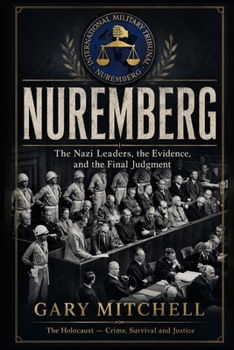
Nuremberg: The Nazi Leaders, the Evidence, and the Final Judgment
No Customer Reviews

Twenty-four men were indicted. Twenty-two cases were tried. In Courtroom 600, the surviving leaders of Nazi Germany were forced to answer to the documents their own regime had created. NUREMBERG begins amid the collapse of the Third Reich, as Karl D nitz tried to preserve a government after Hitler's death and Hermann G ring surrendered to the Americans expecting to be treated as a statesman. It follows the prisoners into Allied custody and the prosecutors into captured archives where memoranda, orders, reports and films revealed how power had operated inside the Nazi state. The book then enters the trial itself: Robert H. Jackson's opening case, the films that confronted the courtroom with the camps, the witnesses who connected offices to action, and the legal struggle to judge aggressive war, persecution, forced labour and mass murder. At its centre is G ring's extraordinary defence and the cross-examinations that tested his account against the regime's own records. This is not a story of simple justice. The tribunal was created by victorious powers. Soviet prosecutors advanced the false Katyn allegation. The law of aggressive war was contested, Allied conduct was not tried, and the proceedings could not contain the full history of the Holocaust. NUREMBERG treats those limits as part of the history while showing why the public evidential record still matters. For readers of World War II history, the Holocaust, international law and courtroom drama, Gary Mitchell offers a clear, gripping and carefully qualified account of the trial that changed how the world speaks about state crime and individual responsibility.
Format:Paperback
Language:English
ISBN:B0HBMXK1NC
ISBN13:9798189091698
Release Date:July 2026
Publisher:Independently Published
Length:494 Pages
Weight:1.44 lbs.
Dimensions:1.0" x 6.0" x 9.0"
Customer Reviews
0 rating
Copyright © 2026 Thriftbooks.com
Terms of Use | Privacy Policy | Do Not Sell/Share My Personal Information | Cookie Policy | Cookie Preferences | Accessibility Statement
ThriftBooks ® and the ThriftBooks ® logo are registered trademarks of Thrift Books Global, LLC
ThriftBooks ® and the ThriftBooks ® logo are registered trademarks of Thrift Books Global, LLC
