


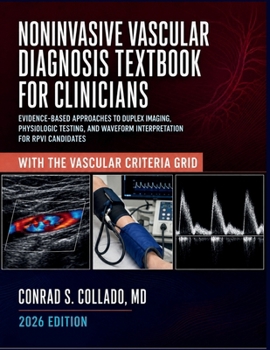
Noninvasive Vascular Diagnosis Textbook for Clinicians: Evidence-Based Approaches to Duplex Imaging, Physiologic Testing, and Waveform Interpretation

Read the Waveform, Trust the Threshold, Report It Right
Built for the clinician who has to grade the stenosis, classify the endoleak, and defend the call before the surgeon acts on it, this reference connects Doppler physics and hemodynamics to the velocity criteria that drive real vascular decisions. It moves through cerebrovascular, peripheral arterial, venous, and abdominal-visceral assessment before closing with the surveillance protocols, follow-up windows, that decide whether a bypass graft, stent, or dialysis access fails quietly or gets caught in time. A five-part diagnostic callout, the Finding, the Measurement, the Criterion, the Trap Logic, and the Grid Call, runs through every chapter, turning a raw velocity number into a stated, defensible conclusion, and a back-of-book indexed compendium consolidates every threshold in the book for rapid lookup at the workstation.
From the Waveform to the Report, You Will
- Grade carotid stenosis with confidence - ICA/CCA ratio and contralateral-occlusion adjustments that stop a compensatory velocity rise from being misread as tighter disease.
- Separate vascular claudication from pseudoclaudication - post-exercise ABI criteria that settle the diagnosis before treatment starts.
- Age a deep vein thrombosis correctly - compressibility and echogenicity findings that distinguish acute clot from chronic, recanalized disease.
- Map veins for bypass and dialysis access - diameter, depth, and the mandatory central vein assessment surgeons need before the first incision.
- Screen and surveil the aorta - diameter thresholds, growth-rate triggers, and endoleak classification that decide when watching becomes intervening.
- Diagnose chronic mesenteric ischemia - fasting and postprandial criteria that separate an incidental single-vessel finding from true multivessel disease.
- Read a stented or post-endarterectomy vessel on its own terms - modified thresholds that keep a normally functioning stent from being overgraded as failing.
- Resolve conflicting studies - mechanism-based reasoning for duplex-versus-CTA/MRA discordance, backed by threshold recall built for RPVI-level practice.
Open it before your next scan - the thresholds every vascular decision in this book depends on, indexed and ready.
Customer Reviews
ThriftBooks ® and the ThriftBooks ® logo are registered trademarks of Thrift Books Global, LLC
