


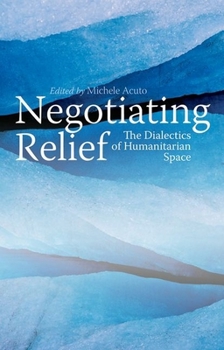
Negotiating Relief: The Dialectics of Humanitarian Space
No Customer Reviews

Select Format
Select Condition 
Book Overview
While humanitarianism is unquestionably a fast-growing subject of practitioner and scholarly engagement, much discussion about it is predicated on a dangerous dichotomy between "aid givers" and "relief takers" that largely misrepresents the negotiated nature of the humanitarian enterprise. To highlight the tension between these relationships, this book focuses on the "humanitarian spaces" and the dynamics of "humanitarian diplomacy" (both local and global) that sustain them. It gathers key voices to provide a critical analysis of international theory, geopolitics and dilemmas underpinning the negotiation of relief. Offering recent examples from cases such as Kosovo and the Tsunami, or ongoing crises like Haiti, Libya, Darfur and Somalia, the contributors analyze the complexity of humanitarian diplomacy and the multiplicity of geographies and actors involved in it. By investigating the transformations that both diplomacy and humanitarianism are undergoing, the authors prompt us towards a critical and eclectic understanding of the dialectics of humanitarian space. Negotiating Relief aims to present humanitarianism not only as a relief delivery mechanism but also as a phenomenon in dialogue with both localized crises and global politics.
Format:Paperback
Language:English
ISBN:1849042667
ISBN13:9781849042666
Release Date:August 2014
Publisher:Hurst & Co.
Length:320 Pages
Weight:1.05 lbs.
Dimensions:0.9" x 5.4" x 8.4"
Customer Reviews
0 rating
Copyright © 2026 Thriftbooks.com
Terms of Use | Privacy Policy | Do Not Sell/Share My Personal Information | Cookie Policy | Cookie Preferences | Accessibility Statement
ThriftBooks ® and the ThriftBooks ® logo are registered trademarks of Thrift Books Global, LLC
ThriftBooks ® and the ThriftBooks ® logo are registered trademarks of Thrift Books Global, LLC
