


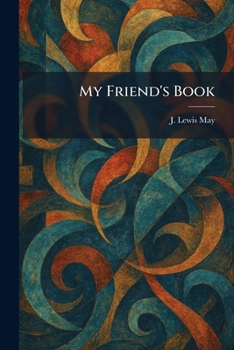
My Friend's Book

Select Format
Select Condition 
Book Overview
"My Friend's Book" is a captivating semi-autobiographical work by the Nobel Prize-winning author Anatole France. This evocative narrative serves as a series of delicate vignettes that explore the realms of childhood and the early formation of a literary mind. Through the eyes of his alter ego, Pierre Nozi re, France recounts the simple yet profound experiences of growing up in mid-nineteenth-century Paris, capturing the wonder of discovery and the bittersweet nature of nostalgia.
The work is celebrated for its lyrical prose and its insightful observations on human nature and the innocence of youth. France masterfully blends reality with poetic imagination, offering readers a window into the formative years that shaped one of France's most esteemed men of letters. From the quiet security of the nursery to the bustling streets of the Latin Quarter, the stories within "My Friend's Book" resonate with universal themes of growth, family, and the enduring power of memory. This classic piece of literature remains an essential read for those who appreciate fine storytelling and the timeless charm of reflections on a life well-lived.
This work has been selected by scholars as being culturally important, and is part of the knowledge base of civilization as we know it. This work was reproduced from the original artifact, and remains as true to the original work as possible. Therefore, you may see the original copyright references, library stamps (as most of these works have been housed in our most important libraries around the world), and other notations in the work.
This work is in the public domain in the United States of America, and possibly other nations. Within the United States, you may freely copy and distribute this work, as no entity (individual or corporate) has a copyright on the body of the work.
As a reproduction of a historical artifact, this work may contain missing or blurred pages, poor pictures, errant marks, etc. Scholars believe, and we concur, that this work is important enough to be preserved, reproduced, and made generally available to the public. We appreciate your support of the preservation process, and thank you for being an important part of keeping this knowledge alive and relevant.
Customer Reviews
ThriftBooks ® and the ThriftBooks ® logo are registered trademarks of Thrift Books Global, LLC
