


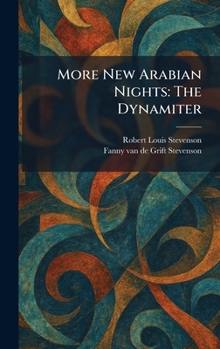
More New Arabian Nights: The Dynamiter

"More New Arabian Nights the Dynamiter" is a captivating collection of interconnected stories that blend elements of adventure, mystery, and political satire. Co-written by the legendary Robert Louis Stevenson and his wife Fanny van de Grift Stevenson, this work serves as a spirited companion to the earlier "New Arabian Nights". Set against the fog-shrouded backdrop of Victorian London, the narrative follows three impoverished young gentlemen-Challoner, Somerset, and Desborough-as they resolve to seek their fortunes through various adventures, only to find themselves entangled in a web of explosive conspiracies and bizarre encounters.
The stories delve into the contemporary anxieties of the late 19th century, specifically the rise of political terrorism, but treat these heavy subjects with a distinctively lighthearted and ironic touch. Through a series of improbable coincidences and outlandish characters, the authors masterfully parody the sensationalist fiction of their day while maintaining a high level of suspense and wit. "More New Arabian Nights the Dynamiter" remains a significant example of the Stevensons' collaborative imagination, offering readers a unique blend of urban gothic atmosphere and playful storytelling that highlights the complexities of modern city life.
This work has been selected by scholars as being culturally important, and is part of the knowledge base of civilization as we know it. This work was reproduced from the original artifact, and remains as true to the original work as possible. Therefore, you may see the original copyright references, library stamps (as most of these works have been housed in our most important libraries around the world), and other notations in the work.
This work is in the public domain in the United States of America, and possibly other nations. Within the United States, you may freely copy and distribute this work, as no entity (individual or corporate) has a copyright on the body of the work.
As a reproduction of a historical artifact, this work may contain missing or blurred pages, poor pictures, errant marks, etc. Scholars believe, and we concur, that this work is important enough to be preserved, reproduced, and made generally available to the public. We appreciate your support of the preservation process, and thank you for being an important part of keeping this knowledge alive and relevant.
Customer Reviews
ThriftBooks ® and the ThriftBooks ® logo are registered trademarks of Thrift Books Global, LLC
