


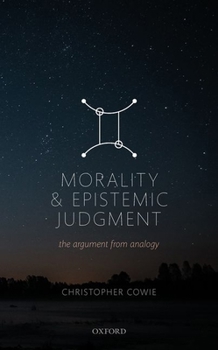
Morality and Epistemic Judgement: The Argument from Analogy
No Customer Reviews

Moral judgments attempt to describe a reality that does not exist, so they are all false. This is the moral error theory, a deeply troubling yet plausible view that is now one of the canonical positions in moral philosophy. The most compelling argument against it is the argument from analogy. According to this, the moral error theory should be rejected because it would seriously compromise our practice of making epistemic judgments-judgments about how we ought to form and revise our beliefs in light of our evidence-and could undermine systematic thought and reason themselves. Christopher Cowie provides a novel assessment of the recent attention paid to this topic in moral philosophy and epistemology. He reasons that the argument from analogy fails because moral judgments are unlike judgments about how we ought to form and revise our beliefs in light of our evidence. On that basis, a moral error theory does not compromise the practice of making epistemic judgments. The moral error theory may be true after all, Cowie concludes, and if it is then we will simply have to live with its concerning consequences.
Format:Hardcover
Language:English
ISBN:0198842732
ISBN13:9780198842736
Release Date:December 2019
Publisher:Oxford Univ PR
Length:246 Pages
Weight:0.95 lbs.
Dimensions:0.9" x 5.5" x 8.6"
Related Subjects
PhilosophyCustomer Reviews
0 rating
Copyright © 2026 Thriftbooks.com
Terms of Use | Privacy Policy | Do Not Sell/Share My Personal Information | Cookie Policy | Cookie Preferences | Accessibility Statement
ThriftBooks ® and the ThriftBooks ® logo are registered trademarks of Thrift Books Global, LLC
ThriftBooks ® and the ThriftBooks ® logo are registered trademarks of Thrift Books Global, LLC
