


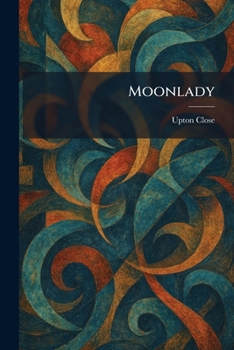
Moonlady

Select Format
Select Condition 
Book Overview
"Moonlady" is a compelling novel set against the turbulent backdrop of early 20th-century China during a period of intense nationalistic awakening. The story captures the fervor of student-led movements and the complex social changes sweeping through Beijing. At its heart, the narrative explores the intersections of tradition and modernity through the experiences of its central characters, who find themselves caught in the crosscurrents of political intrigue and personal duty.
The work provides an evocative portrayal of the title character, who embodies the grace of Chinese culture while navigating the challenges of a society in rapid transition. As the protagonists grapple with the shifting tides of history, "Moonlady" offers readers a profound look at the cultural and political struggles that defined China's path into the modern era. Rich in atmosphere and historical detail, this novel remains a significant literary contribution to the understanding of East-West relations and the internal dynamics of the Chinese revolution. It is a vital work for those interested in historical fiction, Asian studies, and the enduring human spirit in times of great social upheaval.
This work has been selected by scholars as being culturally important, and is part of the knowledge base of civilization as we know it. This work was reproduced from the original artifact, and remains as true to the original work as possible. Therefore, you may see the original copyright references, library stamps (as most of these works have been housed in our most important libraries around the world), and other notations in the work.
This work is in the public domain in the United States of America, and possibly other nations. Within the United States, you may freely copy and distribute this work, as no entity (individual or corporate) has a copyright on the body of the work.
As a reproduction of a historical artifact, this work may contain missing or blurred pages, poor pictures, errant marks, etc. Scholars believe, and we concur, that this work is important enough to be preserved, reproduced, and made generally available to the public. We appreciate your support of the preservation process, and thank you for being an important part of keeping this knowledge alive and relevant.
Customer Reviews
ThriftBooks ® and the ThriftBooks ® logo are registered trademarks of Thrift Books Global, LLC
