


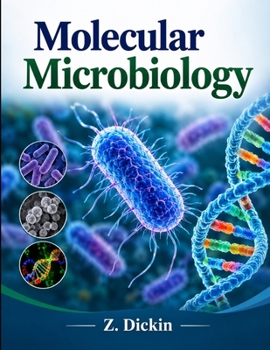
Molecular Microbiology
No Customer Reviews

Molecular microbiology is one of the most rapidly developing areas of modern biological science. It combines the principles of microbiology, molecular biology, genetics, biochemistry, genomics, and biotechnology to understand microorganisms at the molecular level. The study of microorganisms has progressed from observing their morphology and growth characteristics to investigating their genomes, gene-expression patterns, proteins, metabolic pathways, regulatory networks, and interactions with their environments and hosts.
This book, Molecular Microbiology, has been designed to provide a comprehensive introduction to the molecular principles that govern microbial life. It is intended to help students, researchers, educators, and general readers develop a structured understanding of how microorganisms store, express, regulate, exchange, and evolve genetic information.
The book begins with fundamental concepts of molecular microbiology and gradually progresses toward more advanced topics. Important areas such as microbial cell structure, DNA replication, transcription, translation, gene regulation, mutation, genetic recombination, horizontal gene transfer, microbial metabolism, stress responses, microbial communication, and molecular mechanisms of pathogenicity are explored throughout the chapters.
Particular attention is given to the molecular mechanisms underlying microbial adaptation and survival. Microorganisms live in constantly changing environments and must respond to variations in nutrients, temperature, pH, oxygen availability, host defenses, antimicrobial compounds, and other stresses. Understanding these responses provides important insights into microbial evolution and ecological success.
The book also examines molecular mechanisms of microbial pathogenesis. The ability of pathogenic microorganisms to attach to host cells, invade tissues, acquire nutrients, avoid immune responses, produce toxins, form biofilms, and regulate virulence genes is considered from a molecular perspective. These concepts are particularly important for understanding infectious diseases and the continuing challenge of antimicrobial resistance.
Another major theme is microbial genetics. Microorganisms possess remarkable genetic flexibility, and processes such as mutation, transformation, conjugation, transduction, recombination, and mobile genetic-element activity contribute to microbial evolution. These mechanisms can produce new phenotypes, including antimicrobial resistance and altered virulence characteristics.
Modern molecular techniques have transformed microbiological research. Techniques such as polymerase chain reaction, DNA sequencing, genome analysis, transcriptomics, proteomics, metagenomics, CRISPR-based technologies, and bioinformatics have made it possible to study microorganisms with unprecedented precision. These technologies are discussed as important tools for research, diagnosis, surveillance, biotechnology, and environmental studies.
The final chapter considers applications and future perspectives of molecular microbiology. Molecular approaches are increasingly important in medical diagnosis, vaccine development, antimicrobial discovery, industrial biotechnology, agriculture, environmental microbiology, microbiome research, synthetic biology, and public health. Emerging technologies such as single-cell analysis, multi-omics, artificial intelligence, advanced sequencing, and synthetic microbial systems are likely to further expand the field.
This book, Molecular Microbiology, has been designed to provide a comprehensive introduction to the molecular principles that govern microbial life. It is intended to help students, researchers, educators, and general readers develop a structured understanding of how microorganisms store, express, regulate, exchange, and evolve genetic information.
The book begins with fundamental concepts of molecular microbiology and gradually progresses toward more advanced topics. Important areas such as microbial cell structure, DNA replication, transcription, translation, gene regulation, mutation, genetic recombination, horizontal gene transfer, microbial metabolism, stress responses, microbial communication, and molecular mechanisms of pathogenicity are explored throughout the chapters.
Particular attention is given to the molecular mechanisms underlying microbial adaptation and survival. Microorganisms live in constantly changing environments and must respond to variations in nutrients, temperature, pH, oxygen availability, host defenses, antimicrobial compounds, and other stresses. Understanding these responses provides important insights into microbial evolution and ecological success.
The book also examines molecular mechanisms of microbial pathogenesis. The ability of pathogenic microorganisms to attach to host cells, invade tissues, acquire nutrients, avoid immune responses, produce toxins, form biofilms, and regulate virulence genes is considered from a molecular perspective. These concepts are particularly important for understanding infectious diseases and the continuing challenge of antimicrobial resistance.
Another major theme is microbial genetics. Microorganisms possess remarkable genetic flexibility, and processes such as mutation, transformation, conjugation, transduction, recombination, and mobile genetic-element activity contribute to microbial evolution. These mechanisms can produce new phenotypes, including antimicrobial resistance and altered virulence characteristics.
Modern molecular techniques have transformed microbiological research. Techniques such as polymerase chain reaction, DNA sequencing, genome analysis, transcriptomics, proteomics, metagenomics, CRISPR-based technologies, and bioinformatics have made it possible to study microorganisms with unprecedented precision. These technologies are discussed as important tools for research, diagnosis, surveillance, biotechnology, and environmental studies.
The final chapter considers applications and future perspectives of molecular microbiology. Molecular approaches are increasingly important in medical diagnosis, vaccine development, antimicrobial discovery, industrial biotechnology, agriculture, environmental microbiology, microbiome research, synthetic biology, and public health. Emerging technologies such as single-cell analysis, multi-omics, artificial intelligence, advanced sequencing, and synthetic microbial systems are likely to further expand the field.
Format:Paperback
Language:English
ISBN:B0HHZ3RH54
ISBN13:9798172239885
Release Date:September 2026
Publisher:Independently Published
Length:346 Pages
Weight:1.77 lbs.
Dimensions:0.7" x 8.5" x 11.0"
Customer Reviews
0 rating
Copyright © 2026 Thriftbooks.com
Terms of Use | Privacy Policy | Do Not Sell/Share My Personal Information | Cookie Policy | Cookie Preferences | Accessibility Statement
ThriftBooks ® and the ThriftBooks ® logo are registered trademarks of Thrift Books Global, LLC
ThriftBooks ® and the ThriftBooks ® logo are registered trademarks of Thrift Books Global, LLC
