


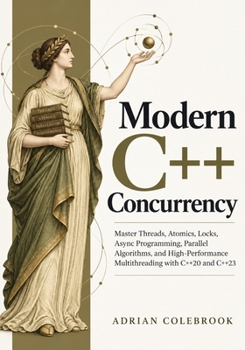
Modern C++ Concurrency: Master Threads, Atomics, Locks, Async Programming, Parallel Algorithms, and High-Performance Multithreading with C++20 and C++

Modern C++ concurrency stops being intimidating when you understand what the language is actually doing.
Writing fast multithreaded software is not simply a matter of starting more threads. Real performance comes from understanding how threads communicate, how shared data is protected, when atomics make sense, where locks become bottlenecks, and how modern C++ helps you coordinate work safely.
Modern C++ Concurrency gives C++ developers a practical path from the fundamentals of multithreading to the techniques used in high-performance concurrent applications.
Instead of burying you in theory, Adrian Colebrook explains concurrency through clear examples, practical design patterns, and real-world situations that show not only how each tool works, but when you should use it.
Inside you'll learn how to:
Create and manage threads with std:: thread and std:: jthreadPrevent race conditions, deadlocks, and unsafe shared stateUse mutexes, scoped locks, condition variables, futures, and promisesBuild cleaner asynchronous workflowsWork with C++20 semaphores, latches, barriers, and stop tokensUnderstand atomics and the C++ memory model without drowning in theoryUse acquire/release semantics and memory ordering correctlyDesign thread-safe queues, stacks, caches, and shared resourcesUnderstand lock-free programming and compare-and-exchange operationsBuild thread pools, worker queues, and task-based systemsUse parallel algorithms and execution policiesReduce contention, false sharing, and unnecessary synchronizationDiagnose race conditions, deadlocks, starvation, and timing-dependent bugsDesign concurrent software that remains maintainable as it growsWhether you're moving beyond basic C++, modernizing an existing application, preparing for systems-level development, or trying to understand why your multithreaded code behaves unpredictably, this book gives you the tools to build concurrent software with greater confidence.
Stop treating concurrency like black magic. Learn how the pieces fit together-and start writing modern C++ that can actually use the hardware beneath it.
Customer Reviews
ThriftBooks ® and the ThriftBooks ® logo are registered trademarks of Thrift Books Global, LLC
