


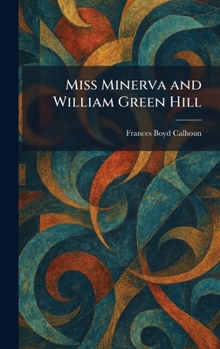
Miss Minerva and William Green Hill

Select Format
Select Condition 
Book Overview
"Miss Minerva and William Green Hill" is a beloved classic of Southern humor that tells the heartwarming and often hilarious story of a prim, rule-bound spinster and her lively young nephew. When the orphaned William Green Hill is sent to live with his maiden aunt, Miss Minerva, two vastly different worlds collide. Miss Minerva, who prides herself on her orderly and quiet life, is quickly overwhelmed by the spirited boy and his colorful group of friends.
Set in a small Southern town, the narrative follows William's mischievous escapades and the challenges Miss Minerva faces as she attempts to raise him according to her strict standards. Through a series of charming vignettes, Frances Boyd Calhoun captures the innocence of childhood and the transformative power of love and laughter. The book explores themes of family, community, and the clash between Victorian decorum and youthful exuberance. Known for its witty dialogue and memorable characters, "Miss Minerva and William Green Hill" remains a significant work of early 20th-century American regional fiction, offering a nostalgic glimpse into a bygone era of storytelling.
This work has been selected by scholars as being culturally important, and is part of the knowledge base of civilization as we know it. This work was reproduced from the original artifact, and remains as true to the original work as possible. Therefore, you may see the original copyright references, library stamps (as most of these works have been housed in our most important libraries around the world), and other notations in the work.
This work is in the public domain in the United States of America, and possibly other nations. Within the United States, you may freely copy and distribute this work, as no entity (individual or corporate) has a copyright on the body of the work.
As a reproduction of a historical artifact, this work may contain missing or blurred pages, poor pictures, errant marks, etc. Scholars believe, and we concur, that this work is important enough to be preserved, reproduced, and made generally available to the public. We appreciate your support of the preservation process, and thank you for being an important part of keeping this knowledge alive and relevant.
Customer Reviews
ThriftBooks ® and the ThriftBooks ® logo are registered trademarks of Thrift Books Global, LLC
