


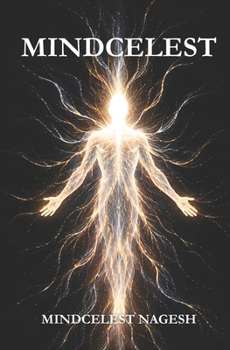
MindCelest

What if humanity was never meant to spend its entire existence merely surviving?
We are born into a world we did not choose.
We do not choose our birthplace, our language, our religion, our family, our social identity, or the beliefs that surround us. Yet, as we grow, these things quietly become part of our understanding of reality.
We inherit answers before we learn how to question them.
But beneath the identities, borders, traditions, and assumptions that shape human life lies a question far older and deeper:
Why are we here?
MindCelest begins with this question-and refuses to rush toward an easy answer.
It explores the nature of human existence through the meeting point of philosophy, science, human psychology, morality, intelligence, and cosmology. It asks why human beings divide themselves by religion, caste, race, nationality, and inherited identity while belonging to the same species. It examines how beliefs are formed, how curiosity can be preserved or suppressed, and why doubt may be one of the first steps toward genuine understanding.
But the question becomes larger.
If the universe produced stars, planets, life, and eventually a brain capable of asking questions about the universe itself, then what does that make us?
Perhaps we are not merely observers standing outside reality.
Perhaps we are a part of reality that has become capable of observing itself.
From the origin of the universe to the emergence of life, from the human mind to civilization, from survival to scientific discovery, MindCelest follows a single unfolding possibility:
Survival is the foundation. Understanding is the direction.
The book does not claim that humanity has discovered a predetermined purpose. Instead, it asks whether understanding itself could become a purpose worth choosing-a direction in which humanity can reduce suffering, expand knowledge, protect life, question its assumptions, and move beyond the limits imposed by mere survival.
Because humanity's greatest challenge may no longer be simply learning how to survive.
It may be learning what to do with the intelligence that survival has given us.
And perhaps the deepest question is not:
How long can humanity survive?
But:
What will humanity do with the time it has?
MindCelest is an invitation to question what you believe, examine where those beliefs came from, look beyond the boundaries that divide us, and confront the unknown with curiosity rather than certainty.
MindCelest
Customer Reviews
ThriftBooks ® and the ThriftBooks ® logo are registered trademarks of Thrift Books Global, LLC
