
Skip to content
Scan a barcode
Scan
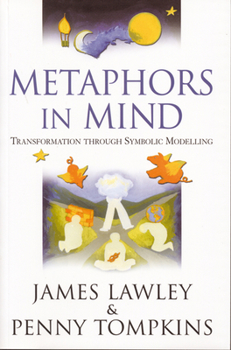
Paperback Metaphors in Mind: Transformation Through Symbolic Modelling Book

ISBN: 0953875105

ISBN13: 9780953875108

Metaphors in Mind: Transformation Through Symbolic Modelling

Select Format

Select Condition ThriftBooks Help Icon

Recommended

Format: Paperback

Condition: Very Good

$16.19
Save $21.76!
List Price $37.95
Almost Gone, Only 1 Left!

Book Overview

What do you do as a therapist, teacher, doctor or manager when your client, student, patient or colleague says "It's like I'm hitting my head against a brick wall", "I've got a knot in my stomach" or "I'm looking for the right path to take"?

Metaphors in Mind describes how to give individuals an opportunity to discover how their symbolic perceptions are organised, what needs to happen for these to change, and how they can develop as a result.

Based on David Grove's pioneering therapeutic approach and use of Clean Language, Symbolic Modelling is an emergent, systemic and iterative way of facilitating the psychotherapeutic process.

This comprehensive book covers the theory of metaphor, self-organising systems, symbolic modelling, the practice of Clean Language, the five-stage therapeutic process, and includes three client transcripts.

Customer Reviews

5 ratings

An amazing book!

I consider myself pretty "cutting-edge" in terms of personal-growth technologies, and this was definitely something new! I highly recommend this to therapists, coaches or really anyone who wants to effectively navigate and help others (or yourself) heal and develop their minds. I fear that some may be turned off by the long sub-title, but really this is about how to understand and use metaphors (and metaphorical language) in a powerfully healing way. I have a lot of background in NLP and therapy and I don't know if others will find it as accessible without this. Once you learn "clean language" (a form of asking questions and eliciting information that does not "contaminate" the answers with your own assumptions, metaphors, etc.) you will wonder how you (or any therapist) gets by without it! I just wish these people lived closer, so I could more easily study with them (and experience being on the receiving end - other than in self-guided sessions!).

All The Difference

The nature of the book turns me toward testimony rather than review, because the book is where a change began for me. I thought Metaphors in Mind had something to do with literary analysis, which is what I was looking for. I was thus a little disappointed when I first opened the book, but then I couldn't put it down (see . . . it's impossible to live outside metaphors). So compelling was its proposal, metaphor is reality, that for the first time in my more than fifty years, I sought a therapist who ascribed to its principles. By happy coincidence I was able to meet with James and Penny--two of the gentlest human beings I think I have ever met. What has changed is my relationship and response to the images I live with and have lived through, once I spoke what they were, and where they resided in me, and what it felt like living with them, and what needed to happen to dispell--those ghosts, bugaboos and, ah yes those very symbolic ties that bind and double bind ones consciousness. For an English teacher to obtain reality through the life that exists in words is an awesome and radical experience. Without the book though there wouldn't have been a beginning . . . or, so as not to try logic, there wouldn't have been such a beginning. Metaphors in Mind is clear, precise and orderly, a succinct presentation of theory and pratice, even for the lay reader. It's an extraordinary introduction, and perhaps a great beginning. Before me now in my classroom are the basic clean language iterations and questions to consider, perhaps, the life of the symbols within Gatsby or Hamlet or Elizabeth Bennett. My thanks to James Lawley and Penny Tompkins.

The Importance of Metaphors

The previous reviewers spoke of the value of this book for therapists and mental health professionals. However, Metaphors in Mind will also provide the interested layman with a fascinating view into the way people create their "realities." The explanations are clear and any special vocabulary is well defined. The annotated transcripts provide powerful examples of the way metaphors shape people's perceptions. I would highly recommend Metaphors in Mind to anyone interested in the intriguing landscape of the human mind.

Groundbreaking development in human changework

This is a definitive book about the most important development in human psychology since Freud. Lawley and Tompkins have written an accessible, insightful account of a new way of working with verbal and nonverbal language that will not only appeal to the ordinary reader but to therapists, psychologists, educators, trainers, doctors, managers and consultants - indeed anyone interested in facilitating human change. Read this book and I guarantee you will never use language the same way again.

A Major Work In Psychology And Psychotherapy

I believe this book marks a significant advance in psychology and therapy. David Grove is a genius. For me, he is up there with Freud, Jung and Milton Erickson. And while anyone who experiences David at work can see he is doing something very different with his clients, understanding that something has not been easy until the arrival of "Metaphors in Mind". The authors have had access to David and have made his work accessible. Not many serious books are as well written as this one. Penny & James have managed to make the chapters largely self-contained. Chapters begin with an outline of what will be covered, then the details and then a useful summary. There is no mystification. It is obvious the authors want people to have a clear understanding. The book is well referenced, has a useful index and also contains three annotated transcripts of symbolic modelling at work with clients. The only limitation is that it is a book. Symbolic Modelling also pays attention to body language, "line of sight" (where people look as they think) and the way that words are said. And David Grove has developed a style of therapy that is equally rich in language and what goes with language. I hope audio and videotapes are the next project for Penny and James or that David will produce taped copies of his more recent work.
Copyright © 2025 Thriftbooks.com Terms of Use | Privacy Policy | Do Not Sell/Share My Personal Information | Cookie Policy | Cookie Preferences | Accessibility Statement
ThriftBooks ® and the ThriftBooks ® logo are registered trademarks of Thrift Books Global, LLC

GoDaddy Verified and Secured