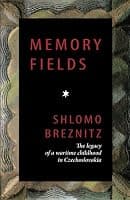
In Memory Fields, Shlomo Breznitz shifts from past to present, from a child's perspective to an adult's, to tell a poignant, gripping, and often terrifying story. Caught in Czechoslovakia during the Holocaust, Breznitz's family moved from village to village until it became clear that there was no escaping the Nazis. Before they were sent to Auschwitz, however, Breznitz's parents persuaded the Sisters of Saint Vincent to take their two recently converted children into the convent's orphanage. Shlomo called Juri was just eight years old. Separated from his parents and from his sister Judith (the nuns segregated the sexes, and communication between them was rarely allowed), Juri recounts his often devastating experiences with the other orphans, the nuns, his teacher and classmates at the village school, the prelate and the mother superior, and the Nazi officers who periodically visited the orphanage. He describes his overwhelming feelings of isolation and loneliness, his persistent dread of being found out as a "stinking Jew" (constantly hiding his circumcision), his earnest determination to be a good Catholic, and the crushing sense of danger that loomed over him at every moment. Memory Fields, however, goes beyond its recollections of childhood. It speaks also for Breznitz the psychologist, as he explores the nature of cruelty and kindness, of stifling fear and outstanding courage, of memory and the ways in which it shapes our lives. In the last chapter of the book, almost fifty years later Breznitz writes of returning to Czechoslovakia and revisiting the places so vivid in his memory, in hopes of finding the nuns who saved his and his sister's life. Helen Epstein reviewed the first edition of the book in the Boston Globe, December 27, 1992. She wrote: "[The] majority of child survivors [of the Holocaust] were carefully hidden with Gentile friends, with strangers or in the orphanages of Christian religious orders that offered them protection, sometimes with the stipulation that they convert. "Shlomo Breznitz was 8 years old in 1944, and recently converted to Catholicism, when his parents took him to the orphanage run by the sisters of St. Vincent in Zilina, just across the Slovak-Polish border from Auschwitz. Breznitz is now a professor of psychology , and one of a small number of child survivors to write about their experiences during the Holocaust. Like others of the current generation of psychologists, historians, literary critics and memoirists addressing the Holocaust, Breznitz is concerned with more than recollecting people and events. He examines how extreme trauma affects memory. He adds to what we know of children's behavior in situations of extremity. And he meditates on the experience of surviving catastrophe and trying to draw meaning from it. "'For many years, the memories of these events have toyed with me,' Breznitz writes in the prologue. 'While some loose fragments were always available and could be summoned at will, others were more elusive; they would surface briefly, tempting pursuit, only to be lost the next moment. And then there was another type of memory whose existence was suggested by the gaping holes in the story of my childhood. The fields of memory are like a rich archeological site, with layer upon layer of artifacts from different periods, which, through some geological upheaval, got mixed up. Since it is the upheaval itself that is the stuff my story is made of, only part of the truth survived.' "The memoir begins in 1942, and the broken narrative that follows is clearly not only an artistic strategy but a necessity. As an adult, Breznitz has only limited access to both the raw material with which to construct a chronology of events and the interlocking pieces of cause and effect that are the underpinning of narrative. It's short, sometimes sharp, sometimes cloudy sections chop back and forth in time, heralded by such titles as 'First Game of Chess' or 'In This description may be from another edition of this product.