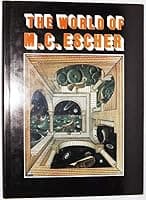
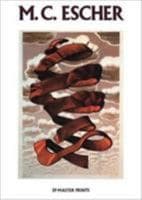
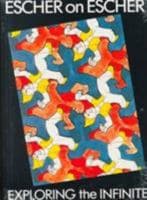
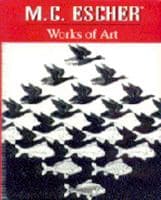
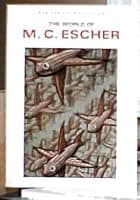
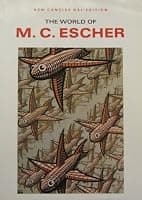
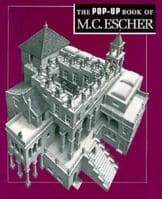
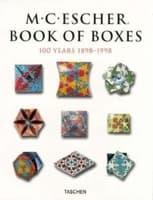
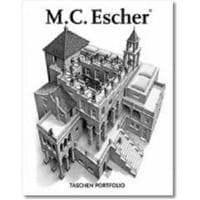
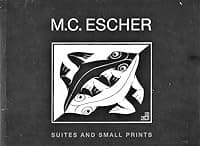
Presenting the structurally unthinkable as though it were a law of nature M.C. Escher was born in 1898 in Leeuwarden (Netherlands). He received his first drawing lessons during secondary school from F.W. van der Haagen, who also taught him the block printing, thus fostering Escher s innate graphic talents. From 1912 to 1922 he studied at the School of Architecture and Ornamental Design in Haarlem, where he was instructed in graphic techniques by S. Jessurun de Mesquita, who greatly influenced Escher s further artistic development. Between 1922 and 1934 the artist lived and worked in Italy. Afterwards Escher spent two years in Switzerland and five in Brussels before finally moving back to Barn in Holland, where he died in 1972. M.C. Escher is not a surrealist drawing us into his dream world, but an architect of perfectly impossible worlds who presents the structurally unthinkable as though it were a law of nature. The resulting dimensional and perspectival illusions bring us into confrontation with the limitations of our sensory perception. About the Series: Each book in TASCHEN s Basic Art series features: a detailed chronological summary of the life and oeuvre of the artist, covering his or her cultural and historical importance a concise biography approximately 100 illustrations with explanatory captions "
This book is exactly what I was looking for as a gift for my boyfriend. Has many pages of M.C Eschers work
1
★★★★★
Perfect!After viewing
By Thriftbooks.com User, May 15, 2008
After viewing a display of Esher's art we wanted more information about him and his work. This book was perfect! It included so much of his work and his own thoughts about the creations. It is a good quality paperback book at a great price!
1
★★★★★
Essential for the Escher fan
By Thriftbooks.com User, August 12, 2006
And c'mon - if you've seen his work, you're a fan. The great thing about this book is not just the extensive and readable biography, but the complete (so they say) catalog of his graphic works. Even people very familiar with Escher's ouvre will be surprised by some of the entries here. They go back to work he did at ages 18 and 19, and show the devleopment of the Escher that has become so famous. It's just a little disappointing that the catalog is printed only in black and white, when so many of his works used color. The catalog reproductions are just that - a listing of his work, not a gallery, so the quarter-page size of most pieces is adequate for recognizing a piece, if not for appreciating it fully. It is fascinating to see Escher's style develop though his (and the twentieth century's) twenties. Various influences early on suggest Beardsley (cat. 49, 67), Picasso (cat. 51, 58), or the pervasive Art Deco of his time (cat.34). Even then, some of Escher's later fascinations begin to emerge, including hands and reflective balls (cat. 88 and 80), symmetries and tilings (cat. 61, 65), and complex interactions of many figures in a repeating structure (cat. 90). The lesser-known parts of his work also start to emerge by the time he's 30, including delicate lithographs (cat. 129, 132). As much as I love his visual paradoxes and flirtation with the infinite, the lithos and mezzotints are the pieces that truly move me. "Snow" and "Blowball" (cat. 278 and 330) have an eloquent simplicity. "Eye" and "Drop" (cat. 344 and 356) demonstrate his classical sense and his perseverance with the demanding medium of mezzotint. The text is also thorough and enjoyable - a good thing, since it takes up half of this heavy book, including its own set of illustrations. I admit that I have only skipped around this section, which starts by describing Escher's father. It's small wonder that his father was an engineer and that his son Arthur studied geology. Although an artist to the core, Escher had fruitful contact with mathematicians and crystallographers. He is one of very few artists that have successfully incorporated hard science into their artistic vision at such a visceral level, and the scientists appreciated that as much as anyone. Although out of print, this book is available inexpensively on the used market. It's one of the best bargains around; if you've read this far, you'll probably find it well worth having. //wiredweird
4
★★★★★
Just gives us what we need, and that's good
By Thriftbooks.com User, April 25, 2004
M.C. Escher is one of those artists that editors and art critics can't help but spew nonsense about. Taschen's collection of Escher's work is remarkably sparse on editorializing and allows the works to do what they have always done best: draw the viewer into the magical and hypnotic realm of M.C. Escher. The prints are extremely crisp and thoughtfully arranged, unlike other collections that throw works together in a hodge-podge fashion. No other artist of the 20th century has had such wide approval and acclaim as M.C. Escher, and this slim volume perfectly expresses why that is so without resorting to pages upon pages of discussions on deconstruction, reality vs. illusion or image vs. icon, and all the other blah-blah-blah that you'll find in other collections. This collection just allows you to turn the pages and enjoy, which I did and you will too.
1
★★★★★
The most beautiful way to see the impossible becoming real?
By Thriftbooks.com User, August 2, 2000
I really have no words to describe the feelings that the work of Escher awakes in me. It's like watching your dreams printed in a paper. This is what this book is about. 76 dreams put into paper. I can really spend hours watching every detail in the drawings. Then you can let some time pass and watch it again and find something different. It's great also to know Escher's thoughts on his work. You can then understand more that little reptile crawling out of the paper. I recommend this book if you want to know what is Escher's work about and also have the chance to admire his work in full page.Great book, really worth the money.
0
★★★★★
The absolute definitive collection of his work.
By Thriftbooks.com User, August 6, 1999
M.C. Escher was a true genius. This book has every print he has ever done. Along with a comprehensive history and a lot of his writings, this book gives you the best insight to a mathematical genius who barely passed math in school.