


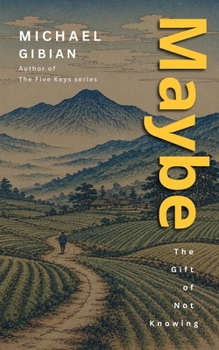
Maybe: The Gift of Not Knowing

There is a Zen story about a farmer whose horse runs away.
"How terrible," says his neighbor. "Maybe," the farmer replies.
The horse returns the next day, bringing three wild horses with it. "How wonderful " says the neighbor. "Maybe," the farmer says again.
His son tries to ride one of the horses and breaks his leg. "How terrible." "Maybe." Soon after, the army comes through, conscripting every able-bodied young man for war - except the farmer's son, whose broken leg saves him.
Most of us have heard some version of this story. Few of us have understood what the farmer actually knew.
Maybe is not resignation. It's not detachment, and it isn't positive thinking wearing a Zen costume. It's something more exacting: the willingness to stay in full contact with what's actually happening, without collapsing it into a verdict before you've felt it completely.
That single move - the pause before the verdict - turns out to be the only real agency any of us has. Not agency over outcomes. Reality doesn't answer to us. But agency over how we meet what arrives.
This book traces that practice through the places it matters most: the story you've written about yourself, the people you love, and the raw, unmanageable fact of impermanence itself. It moves through real loss - including the author's own, tested against the hardest material first, not just the easy stuff - and comes out the other side with something more durable than comfort.
The verdict is the source of most of the suffering in your life. Not the events. The verdict about the events.
This is a short book. It does not need to be long. Like the teaching it's built around, it says one true thing, and says it completely.
Drawing on decades of work in contemplative and somatic traditions - Thich Nhat Hanh, Ron Kurtz, the wisdom of dharma alongside the rigor of direct inquiry - Michael Gibian offers a practice that doesn't ask you to believe anything. Only to look, carefully, at your own experience, and see if it's true.
Customer Reviews
ThriftBooks ® and the ThriftBooks ® logo are registered trademarks of Thrift Books Global, LLC
