


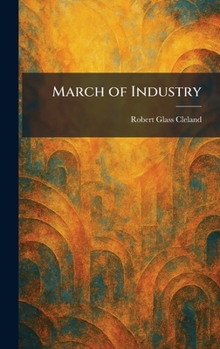
March of Industry

"March of Industry" offers a comprehensive exploration of the economic transformation of California during its most formative years. Written by the esteemed historian Robert Glass Cleland, this work traces the state's evolution from a pastoral, cattle-based economy into a diverse industrial powerhouse. The narrative delves into the rapid development of vital sectors, including the oil industry, large-scale agriculture, transportation networks, and the burgeoning motion picture business.
By examining the unique geographical and social factors that fueled this growth, "March of Industry" provides essential context for understanding the modernization of the American West. Cleland meticulously documents the expansion of infrastructure and the exploitation of natural resources that positioned California as a global economic leader in the early twentieth century. This scholarly yet engaging account serves as a vital resource for readers interested in economic history, regional development, and the enduring legacy of the industrial revolution in the United States. Through its detailed analysis, the book highlights the ingenuity and ambition that defined a pivotal era in the history of the Golden State.
This work has been selected by scholars as being culturally important, and is part of the knowledge base of civilization as we know it. This work was reproduced from the original artifact, and remains as true to the original work as possible. Therefore, you may see the original copyright references, library stamps (as most of these works have been housed in our most important libraries around the world), and other notations in the work.
This work is in the public domain in the United States of America, and possibly other nations. Within the United States, you may freely copy and distribute this work, as no entity (individual or corporate) has a copyright on the body of the work.
As a reproduction of a historical artifact, this work may contain missing or blurred pages, poor pictures, errant marks, etc. Scholars believe, and we concur, that this work is important enough to be preserved, reproduced, and made generally available to the public. We appreciate your support of the preservation process, and thank you for being an important part of keeping this knowledge alive and relevant.
Customer Reviews
ThriftBooks ® and the ThriftBooks ® logo are registered trademarks of Thrift Books Global, LLC
