


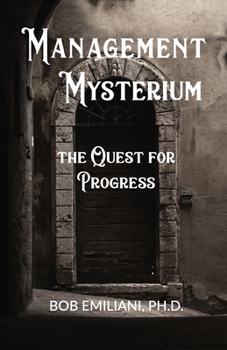
Management Mysterium: The Quest for Progress

Management Mysterium offers a never-before seen perspective that explains why top leaders resist, reject, or ignore demonstrably better management systems. The book's focus is the nearly invisible force of secular spirituality, the quasi-religious beliefs, superstitions, and uncritically inherited preconceptions that compel leaders override facts and cling to the status quo. Tracing a line from medieval Church teachings through economics to modern management, it explains why reason alone so rarely moves leaders, and why classical management persists like a faith.
This book helps readers by:
Revealing Economics as a Secular Religion. Traces how medieval Christian morality about money and trade quietly survives inside modern economics and management, exposing the sacred beliefs beneath a supposedly rational discipline. Exposing the Faith Behind Classical Management. Examines the secular spirituality of classical management; the superstitions, simplistic "one true solutions," and uncritical acceptance that guide leaders' thinking and keep facts and improvement at bay. Contrasting Lean's Very Different Spirituality. Shows how the secular spirituality of Lean management differs fundamentally from classical management's, fact-based rather than preconception-based, and how spirituality even shapes the Lean movement itself. Completing the Case Against the Status Quo. The conclusion describes how classical management's material and spiritual foundations still hold enormous power, that reason alone won't dislodge most top leaders, and that a new "Age of Re-Enlightenment" is needed to move past archaic ideas that no longer serve humanity.
Reflective, cross-disciplinary, and unlike anything in the Lean literature, this book asks readers to see management as a belief system, one where secular spirituality can hide facts or expose them, stifle thinking or liberate it. For leaders, practitioners, scholars who have watched logic and evidence fail to change top leaders' minds, Management Mysterium offers a deeper, spiritual, and more honest explanation of why progress in management thinking and practice is so slow and difficult.
Customer Reviews
ThriftBooks ® and the ThriftBooks ® logo are registered trademarks of Thrift Books Global, LLC
