


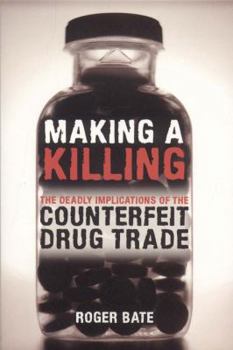
Making a Killing: The Deadly Implications of the Counterfeit Drug Trade
No Customer Reviews

Counterfeit pharmaceuticals kill hundreds of thousands of people every year. Although most pervasive in poor countries, counterfeit drug trafficking is a worrying new phenomenon in the developed world. Payoffs for counterfeiters are high--the global market amounts to billions of dollars per year--and potential punishment is slight compared to the strict penalties facing narcotics dealers. From Internet pharmacies frequented by American consumers to the back streets of New Delhi, counterfeit drug trafficking is a complex, deadly, and increasingly lucrative industry that is becoming an attractive arena for organized crime. In this groundbreaking study, Roger Bate traces pharmaceutical counterfeiting around the world, from developed nations, where counterfeits often target "lifestyle" drugs such as Viagra, to developing countries, where counterfeiters favor therapeutic medicines such as antimalarials and antibiotics. Enforcement in developing nations is hampered by inadequate education, feeble regulation, and sluggish policing of existing laws. The United States is struggling to thwart an insidious Internet market. Making a Killing: The Deadly Implications of the Counterfeit Drug Trade champions greater cooperation between wealthy and poor nations to quash the trade in counterfeit pharmaceuticals. Bate calls for fortified policing resources, harsher penalties for counterfeiters, widespread public education, and commonsense consumer vigilance against this danger. Western policymakers must act immediately to quell the deadly counterfeit market in developing countries--and to ensure the integrity of their products at home.
Format:Paperback
Language:English
ISBN:0844742643
ISBN13:9780844742649
Release Date:May 2008
Publisher:AEI Press
Length:103 Pages
Weight:0.35 lbs.
Dimensions:0.4" x 5.4" x 8.3"
Customer Reviews
0 rating
Copyright © 2026 Thriftbooks.com Terms of Use
| Privacy Policy | Do Not
Sell/Share My Personal Information | Cookie Policy | Cookie Preferences | Accessibility Statement
ThriftBooks® and the ThriftBooks® logo are registered trademarks of Thrift Books Global, LLC
ThriftBooks® and the ThriftBooks® logo are registered trademarks of Thrift Books Global, LLC
