


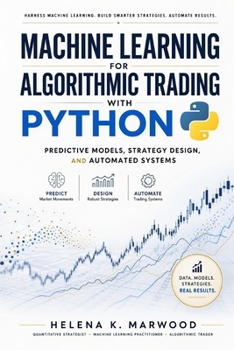
Machine Learning for Algorithmic Trading with Python: Predictive Models, Strategy Design, and Automated Systems

Algorithmic trading has entered a new era where machine learning models can analyze vast streams of market data, detect subtle patterns, and adapt strategies faster than traditional rule-based systems. The challenge is not simply building models, it is integrating them into trading frameworks that operate reliably in real markets.
Machine Learning for Algorithmic Trading with Python provides a structured guide to designing and implementing data-driven trading systems using modern machine learning techniques and Python-based tools.
The book moves beyond theory and focuses on practical architecture: how predictive models translate into signals, how strategies are designed around those signals, and how automated systems execute them within real trading environments.
Readers will explore how machine learning interacts with market structure, risk management, and portfolio construction while learning how to implement reproducible research pipelines and deploy algorithmic strategies.
Inside the book you will learn how to:
- Build predictive market models using supervised and unsupervised learning
- Prepare financial datasets for machine learning workflows
- Design signal pipelines and strategy logic
- Integrate machine learning outputs into algorithmic trading frameworks
- Evaluate models using walk-forward testing and robust validation techniques
- Construct automated trading systems using Python
- Manage execution, risk, and portfolio constraints within systematic strategies
The book uses practical Python examples and focuses on real implementation challenges faced by quantitative traders and developers.
It is designed for:
- Quantitative traders and systematic investors
- Developers building trading algorithms
- Data scientists working with financial time series
- Finance professionals interested in machine learning applications
Rather than presenting isolated models, the book emphasizes the complete lifecycle of algorithmic trading systems, from data preparation and model development to strategy deployment and automation.
If you want to understand how machine learning integrates with modern algorithmic trading infrastructure, this guide provides a clear and practical roadmap.
Customer Reviews
ThriftBooks ® and the ThriftBooks ® logo are registered trademarks of Thrift Books Global, LLC
