


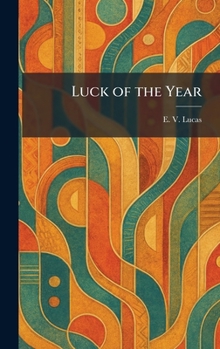
Luck of the Year

"Luck of the Year" is an engaging collection of essays and short sketches by the celebrated British humorist and man of letters, E.V. Lucas. Written with his characteristic wit and keen eye for detail, the volume offers a series of delightful reflections on the small pleasures, ironies, and peculiarities of everyday life in the early 20th century. Lucas explores a wide array of subjects, from the nuances of travel and the charm of animals to the intricacies of human character and the shifting social landscape of his time.
As a prominent figure in the golden age of the English essay, Lucas excels at transforming mundane observations into miniature masterpieces of prose. This collection showcases his ability to blend gentle satire with a warm appreciation for the quirks of the world around him. "Luck of the Year" serves as a testament to the author's versatility and his enduring appeal as a chronicler of the Edwardian and post-war era. Readers will find in these pages a sophisticated yet accessible window into the literary culture and social sensibilities of 1920s Britain, making it a valuable resource for those interested in the history of the essay and classic English humor.
This work has been selected by scholars as being culturally important, and is part of the knowledge base of civilization as we know it. This work was reproduced from the original artifact, and remains as true to the original work as possible. Therefore, you may see the original copyright references, library stamps (as most of these works have been housed in our most important libraries around the world), and other notations in the work.
This work is in the public domain in the United States of America, and possibly other nations. Within the United States, you may freely copy and distribute this work, as no entity (individual or corporate) has a copyright on the body of the work.
As a reproduction of a historical artifact, this work may contain missing or blurred pages, poor pictures, errant marks, etc. Scholars believe, and we concur, that this work is important enough to be preserved, reproduced, and made generally available to the public. We appreciate your support of the preservation process, and thank you for being an important part of keeping this knowledge alive and relevant.
Customer Reviews
ThriftBooks ® and the ThriftBooks ® logo are registered trademarks of Thrift Books Global, LLC
