


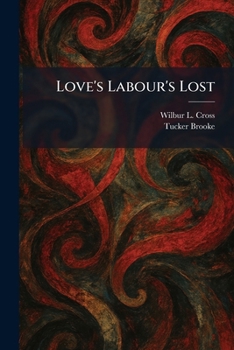
Love's Labour's Lost

"Love's Labour's Lost" is one of William Shakespeare's most linguistically sophisticated and vibrant comedies. The play follows Ferdinand, King of Navarre, and his three noble companions as they take a solemn oath to devote themselves to three years of ascetic study, strictly renouncing the company of women. However, their resolve is immediately challenged by the arrival of the Princess of France and her three ladies-in-waiting on a diplomatic mission. The resulting encounter sparks a dazzling display of wit, pedantry, and romantic pursuit as the men struggle to balance their scholarly vows with their natural inclinations.
Renowned for its elaborate wordplay, puns, and parodies of contemporary literary styles, the work delves into themes of courtly love, the vanity of intellectual pretension, and the complexities of human desire. Unlike many traditional romantic comedies of the era, "Love's Labour's Lost" is celebrated for its unconventional ending, which subverts expectations with a sudden shift toward sobriety and reflection. This edition, prepared with scholarly oversight, highlights the enduring literary value of the play as a quintessential example of Shakespearean wit and its masterful exploration of the tension between idealized oaths and the reality of the human heart.
This work has been selected by scholars as being culturally important, and is part of the knowledge base of civilization as we know it. This work was reproduced from the original artifact, and remains as true to the original work as possible. Therefore, you may see the original copyright references, library stamps (as most of these works have been housed in our most important libraries around the world), and other notations in the work.
This work is in the public domain in the United States of America, and possibly other nations. Within the United States, you may freely copy and distribute this work, as no entity (individual or corporate) has a copyright on the body of the work.
As a reproduction of a historical artifact, this work may contain missing or blurred pages, poor pictures, errant marks, etc. Scholars believe, and we concur, that this work is important enough to be preserved, reproduced, and made generally available to the public. We appreciate your support of the preservation process, and thank you for being an important part of keeping this knowledge alive and relevant.
Customer Reviews
ThriftBooks ® and the ThriftBooks ® logo are registered trademarks of Thrift Books Global, LLC
