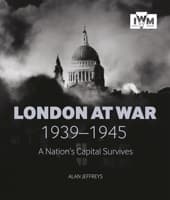
At the outbreak of World War II, London suddenly found itself on the front line. While aerial attacks had played a part in World War I, the astounding technological advances since meant that by 1939 the city was threatened like never before. The attacks took a brutal toll: Almost 19 thousand tons of bombs were dropped on the capital and nearly 30 thousand civilians were killed. The Blitz forever changed the landscape of the city, damaging iconic buildings like Buckingham Palace, the Houses of Parliament, the Tower of London, and the Imperial War Museums. Whole neighborhoods were all but wiped out. In addition to transforming the city's physical landscape, the war brought social changes. The arrival of service personnel from Allied countries and the nations of the Commonwealth made London more cosmopolitan than ever, becoming a crucial transit hub and a popular destination for troops on leave. Using photographs, maps, archival documents, and personal accounts from letters and diaries, London at War tells the story of those turbulent wartime years in the capital, as experienced by those who lived there. This description may be from another edition of this product.