


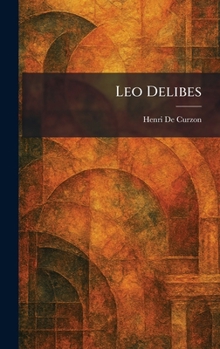
Leo Delibes

"Leo Delibes" is an insightful and comprehensive exploration of the life and artistic achievements of one of France's most celebrated composers of the Romantic era. Written by the esteemed musicologist Henri De Curzon, this work delves into the creative evolution of the man responsible for some of the most enduring masterpieces in the classical repertoire. From his formative years at the Paris Conservatoire to his triumphs at the Opera-Comique and the Paris Opera, the narrative captures the essence of a composer who fundamentally transformed the world of dance and lyrical theater.
The book provides a detailed analysis of the most famous compositions by Delibes, including the beloved ballets "Coppelia" and "Sylvia," as well as his iconic opera "Lakm ." De Curzon skillfully examines his subject's extraordinary gift for melody, his innovative orchestration, and his pivotal role in elevating the status of ballet music during the late nineteenth century. Beyond the music itself, the text paints a vivid picture of the French musical landscape of the 1800s, contextualizing Delibes within his contemporary cultural environment.
This volume remains an essential resource for music lovers, historians, and scholars seeking to understand the lasting legacy of L o Delibes. It stands as a profound tribute to a composer whose charm, elegance, and dramatic flair continue to enchant audiences on global stages.
This work has been selected by scholars as being culturally important, and is part of the knowledge base of civilization as we know it. This work was reproduced from the original artifact, and remains as true to the original work as possible. Therefore, you may see the original copyright references, library stamps (as most of these works have been housed in our most important libraries around the world), and other notations in the work.
This work is in the public domain in the United States of America, and possibly other nations. Within the United States, you may freely copy and distribute this work, as no entity (individual or corporate) has a copyright on the body of the work.
As a reproduction of a historical artifact, this work may contain missing or blurred pages, poor pictures, errant marks, etc. Scholars believe, and we concur, that this work is important enough to be preserved, reproduced, and made generally available to the public. We appreciate your support of the preservation process, and thank you for being an important part of keeping this knowledge alive and relevant.
Customer Reviews
ThriftBooks ® and the ThriftBooks ® logo are registered trademarks of Thrift Books Global, LLC
