The Last Day of a Condemned Man: A New Translation
Conditions
A brand-new, unused copy in perfect condition.
Formats
Conditions
A brand-new, unused copy in perfect condition.
Conditions
A brand-new, unused copy in perfect condition.
Formats
Conditions
A brand-new, unused copy in perfect condition.
Six weeks to live. A mind disintegrating under unbearable pressure. And Victor Hugo's devastating argument against the death penalty.
An unnamed man awaits execution in a Paris prison. In the final weeks before the guillotine, he records his thoughts-memories of his daughter, observations of fellow prisoners, desperate hopes for reprieve, and the gradually fragmenting consciousness of someone facing certain death.
Victor Hugo wrote this brief, intense novel in 1829 when he was twenty-seven, making a radical choice: he never reveals the man's crime or his name, preventing readers from distancing themselves through judgment. The condemned man could be anyone. His suffering is rendered with such psychological precision that readers cannot dismiss him as deserving monster. His impending execution becomes not punishment of criminal but destruction of conscious human being capable of thought, feeling, memory, and love.
The narrative technique was revolutionary for 1829-stream-of-consciousness passages rendering psychological states with immediacy that anticipates modernist literature. The condemned man's thoughts fragment as execution approaches: he obsesses over trivial details, recalls childhood with painful vividness, swings between hope and despair, bargains desperately, and gradually loses coherent sense of self.
Hugo's strategy is brilliant and brutal: by forcing identification with the condemned, he makes readers experience capital punishment not as abstract legal question but as concrete reality of destroying a human being. The novel shows execution as extended psychological torture-not merely the final moment but weeks of unbearable waiting, every day a death, every moment containing knowledge of impending annihilation.
Published initially without Hugo's name, it shocked readers with its unflinching psychological realism. When Hugo added an explicit abolitionist preface in 1832, the work's political purpose became undeniable. It became central text for French abolition movement, cited in legislative debates, helping shift public opinion even if immediate success proved elusive.
For modern readers, the novel retains extraordinary power. Under 100 pages, readable in one sitting, yet its impact far exceeds its length. The moral questions remain urgent wherever capital punishment persists.
Victor Hugo's masterpiece-a devastating psychological portrait and an unanswerable moral challenge that remains as urgent today as in 1829.
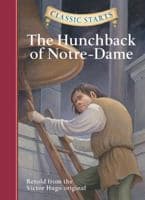
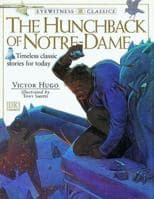
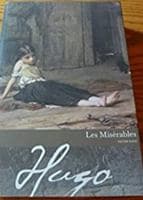
""If a writer wrote merely for his time, I would have to break my pen and throw it away,"" the larger-than-life Victor Hugo once confessed. Indeed, this 19th-century French master's works -- from the epic drama Les Misérables to the classic unrequited love story The Hunchback of Notre Dame -- have spanned the ages, their themes of morality and redemption ever applicable to our times.
A set of very interesting stories from the teen-aged Hugo. It's hard to believe her wrote "Bug Jargal" when he was only 17, but a great deal of that youthful heroism, adventure-seeking, and action story comes through in the story. This is also a good read for those interested in the Haitian revolution and independence, neatly woven into stories in which Hugo's own royalist ideas come through.
I picked this book up due to the noted reference in Dostoevski's "The Idiot" (He considered it a masterpiece) and I found it to be as good as I had anticipated. This edition comes in a nice contemporary cover (with apparent convicts of recent date), which didn't seem "classic" at first, but upon second thought made the work transcend the era in which it was written and open up thought on contemporary capital punishment. The language is poignant and vivid, the overall tone is intimate, and the structure offers lucid imagery that really confronts, not only the plight of a 'condemned' man, but the finitude to which we all face. Excellent and quick read.
I read this book decades ago, now I'm just searching it for my son who is finishing his studies in France. This is not a review of a particular edition, it's a stating on the original french text of "Le dernier jour d'un condamné". This work is a masterpiece of literature of all times. It is written in the first person, the title tells it all, now it's up to you to find the best EN translation or to read it in FR. You won't be deceived: this text belongs to the cultural heritage of mankind.
After reading Les Miserables I bought The Last Day of a Condemned Man, I was not expecting an masterpiece like Les Miserables and, because of that, I had such a great surprise, it's a short book but with an energetic message, it shows the horrors of the condemned, the psycological efects in his person when hes own daughter do not recognize him, everiday expecting only death, and with feeling, truth and talent, Victor Hugo show us why the penalty of death is horrendous to anyone.
I originally read the French version of this book, with a preface (which is probably in the English translation, no doubt) that is an essay of the reasons to abolish the death penalty. Abolishing "la peine de mort" was the point of this book, published in 1830, a year before Hugo published Notre-Dame de Paris (a.k.a. The Hunchback of Notre-Dame); Hugo was 27. The essay logically spells out why the death penalty should be abolished; the actual narrative of the story - a journal that the main character keeps of his every thought and feeling in the six weeks from his sentencing to the moment before he is taken to the Place de Greve to be guillotined - moves the reader emotionally. What was relevant in France in the 18th cent. is relevant in the U.S. today.